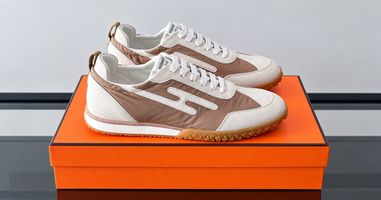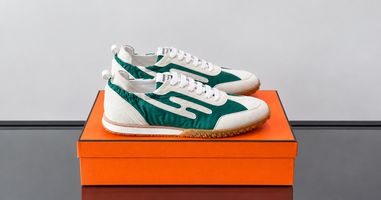
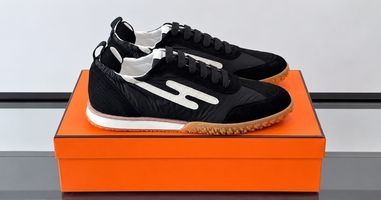
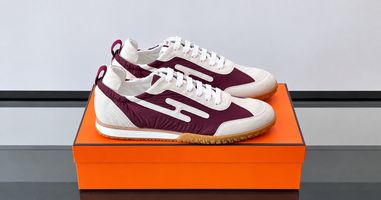
Begin at your usual size when choosing Hermes Jet sneakers, then judge forefoot room, heel security, instep comfort, and sock thickness before deciding. Current official guidance recommends the usual size for this model, so there is no sound reason to assume an automatic size-up or size-down rule.
1. Should You Start From Your Normal Size?
Yes. Your regular size is the most sensible starting point rather than guessing from the sneaker’s exterior proportions.
Current official sizing guidance recommends choosing your usual size for this model. That matters because general advice for designer footwear does not necessarily apply here.
Treat that recommendation as a starting reference, not a guarantee. Foot width, instep height, toe length, and personal preference can still change the final choice.
2. What Should Feel Right Around the Toes?
Length alone does not tell you whether the shoe works.
Your toes need enough forward space to avoid persistent contact during movement, while the forefoot should remain controlled rather than sliding inside.
When trying Hermes Jet shoes, judge the space ahead of the toes only after the heel is fully seated.
The aim is usable room, not the largest possible gap at the front.
3. How Should You Judge Forefoot Width?
Do not use the visible width of the upper as a shortcut.
Jet’s segmented construction can make the exterior appear relatively substantial, but panel shape does not reveal how much usable space your forefoot actually has inside.
Stand normally and notice where the foot meets the sides as weight settles. Light contact is different from sustained compression in one concentrated area.
If the same section keeps pressing against the forefoot, expecting the upper to change dramatically later is not a reliable sizing strategy.
4. What Should You Check Around the Heel?
Heel control matters because excess movement can make an otherwise suitable length feel wrong.
Walk several normal steps and notice whether the heel stays seated or repeatedly rises. Clear lift combined with forward sliding suggests that the foot is not being held effectively.
When evaluating Hermes Jet men sneakers, judge the shoe itself rather than tightening the laces aggressively to compensate for excess internal space.
If strong lace tension is required just to keep the heel in place, another size may work better.
5. How Much Does Instep Height Matter?
Instep height can change the experience even when length and width seem correct.
A higher instep may create discomfort across the top of the foot, while a lower-volume foot may need more lace adjustment to stay secure.
Lacing can fine-tune hold, but it should not be used to compensate for a clear mismatch between shoe volume and foot volume.
6. Can Socks Change the Size Decision?
Yes, especially when the shoe feels close to the boundary between secure and restrictive.
A thin everyday sock occupies less space than a thicker athletic option. Test the shoe in the sock type you realistically expect to wear.
This matters for Hermes Jet sneaker sizing because a small change in internal volume can affect toe freedom, instep comfort, and heel hold at the same time.
Judge the combination you will actually use.
7. What If You Are Between Two Sizes?
Do not decide from length alone.
Compare both options across toe clearance, forefoot comfort, heel security, and overall foot movement. The larger size is not automatically safer if the foot slides, while the smaller one is not more precise if compression develops.
Choose the option that resolves the important issues without creating another problem elsewhere.
If neither feels convincing, the model may simply be a weaker match for your foot proportions.
8. Does Upper Construction Affect How Fit Feels?
Different upper constructions can alter the sensation around the foot even when the listed size stays the same.
Jet versions use combinations of leather, suede, canvas, and textile-based sections. Panel placement and surface structure can therefore influence the initial feel around specific parts of the foot.
That does not mean Hermes Jet men shoes require a different numerical size by material. Judge the individual version and pay particular attention to the forefoot and instep.
Material can refine the assessment, but it should not determine the size by itself.
9. What Should You Notice as the Foot Flexes?
Pay attention to what happens when the shoe bends during a normal step.
The layered upper can create different contact zones across the forefoot and instep. One area that feels neutral while standing may become more noticeable once the foot flexes repeatedly.
Check whether that contact remains mild or develops into a concentrated pressure spot in the same location.
A repeated issue tied to movement deserves more attention than the general unfamiliarity of new footwear.
10. Which Sizing Mistakes Are Easiest to Avoid?
One mistake is choosing by general reputation rather than the model’s current sizing guidance. Another is judging only the amount of space in front of the toes.
Tighter does not automatically mean more secure, and laces cannot correct unsuitable length or internal volume.
Once the sizing question is reasonably settled, the design-and-choice overview provides the broader framework for deciding whether the model itself suits what you want from the purchase.
Sizing should support the decision rather than dominate it.
11. How Should You Evaluate a Pair Ordered Online?
Use both shoes under the same conditions before deciding.
Wear your normal socks and apply similar lace tension on each foot. Then check whether the structured upper sits consistently across both sides or whether one foot develops noticeably different contact around the forefoot, instep, or heel.
For Hermes Jet sneakers, the usual-size recommendation provides a sensible starting point, but symmetry across both feet matters more than appearance alone.
If one shoe behaves differently, judge the more demanding foot rather than assuming both sides will settle identically.
12. What Should Decide the Final Size?
Start from your normal size, then keep it only if the complete setup works.
The stronger choice should provide usable toe space, reasonable forefoot freedom, stable heel placement, and manageable instep contact without requiring extreme lace adjustment.
If one area feels clearly wrong, compare the neighboring size instead of assuming wear will solve it.
The better option keeps the foot controlled without creating persistent discomfort.