
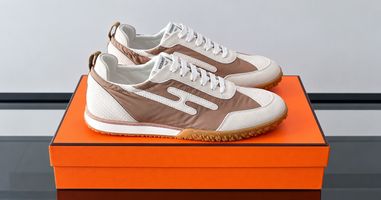
Hermes Jet Sneakers Materials: Which Version Should You Choose?
Hermes Jet sneakers come in several upper constructions, and the best choice depends on the finish you want rather than one material being universally better. Leather-led versions appear cleaner, suede adds a softer surface, while canvas or fabric combinations create stronger texture changes across the upper.
1. What Is the Short Answer on Choosing a Material?
Start with the finish you want the shoe to have.
A smoother upper keeps the layered construction more controlled. Suede makes surface changes easier to notice, while fabric combinations introduce additional contrast between panels.
Current Jet versions span several constructions rather than one standard upper, so material should be treated as part of the model’s character rather than a secondary specification.
The strongest choice is the version whose texture fits the effect you want from the shoe.
2. What Changes When Nappa Leather Is Part of the Upper?
Nappa leather contributes a smoother surface that can make the panel layout appear cleaner, especially when neighboring sections use similar colors.
Current Hermes Jet men shoes include versions combining Nappa leather and suede goatskin, as well as H canvas paired with Nappa leather.
The result is not necessarily a plain-looking sneaker. The underlying panel structure remains visible, but smoother areas can reduce some of the textural activity.
This direction makes more sense when you want the retro construction to remain identifiable without every section competing equally for attention.
3. What Does Suede Add to the Design?
Suede changes the surface before it changes the color.
Its softer texture absorbs and reflects light differently from smooth leather, helping adjoining panels separate even when their tones are relatively close. A full suede-goatskin version can therefore feel different from one that uses suede only as part of a mixed upper.
Jet versions are available in suede goatskin as well as mixed Nappa leather and suede constructions.
Choose suede because you like that softer, more textured finish—not because it is automatically the more casual or refined option in every color combination.
4. Is a Mixed-Material Upper More Noticeable?
Not automatically. The effect depends on how strongly the surfaces separate from one another.
A Hermes Jet sneaker combining smooth and textured sections can reveal more of the panel architecture, particularly when material changes are reinforced by contrasting colors.
A tonal mixed-material version may remain relatively restrained because the surfaces differ without creating a sharp color break. A high-contrast execution can make the same construction much more pronounced.
Material and color therefore need to be read together. Neither tells the full story by itself.
5. What Does Canvas Change?
Canvas introduces a drier, more textile-led surface next to smoother leather sections.
Current H canvas and Nappa leather constructions keep the model’s recognizable side treatment while changing the balance of textures across the upper.
This can make the shoe feel less uniformly leather-led and gives each section a clearer material role.
Someone who wants more surface variation may prefer this direction. Anyone looking for a smoother finish may find leather-dominant versions easier to settle on.
6. How Does Fabric Change the Character of the Shoe?
Fabric-led versions create another layer of separation because textile sections read differently beside suede, the rubber sole, and the leather welt.
Some current Hermes Jet sneakers combine parachute fabric and suede goatskin, retaining the contrasting construction while shifting the upper away from predominantly leather surfaces.
Current versions can be checked directly on the product page: https://www.aomzi.com/products/hermes-jet-men-shoes-casual-sport-sneakers-hoc04
This construction makes sense when texture variation is part of the appeal. If you prefer fewer changes across the surface, a more leather-led execution may be easier to choose.
7. Should You Choose Material Before Color?
Usually, yes.
First decide whether you want a smooth, soft-textured, or more textile-led upper. Once that direction is clear, color becomes easier to evaluate inside a smaller group of suitable versions.
Beginning with color can lead to choosing an attractive combination whose surface character does not match what you actually wanted.
Material answers “which version?” The wider model decision should already answer “why this shoe?”
8. Which Construction Looks More Refined?
There is no single construction that always appears more refined because color contrast and panel treatment affect the result as much as the base material.
A smoother Hermes Jet men sneakers execution can appear cleaner when adjacent sections stay close in tone. Suede may feel richer in surface texture, while canvas or fabric can introduce a more pronounced sport-derived element.
The better question is what type of finish you prefer. One version may look cleaner, while another relies on texture for more visible character.
Avoid treating material names as fixed dress-code labels.
9. How Much Material Contrast Do You Actually Want?
Material contrast can be subtle or pronounced even before color becomes part of the decision.
Leather beside suede creates one level of separation because the surfaces respond differently to light. Canvas beside leather produces a clearer change in texture, while fabric and suede can make the upper feel more layered across multiple sections.
A lower-contrast combination keeps those transitions quieter. A stronger mix makes each panel easier to distinguish.
Anyone still deciding whether this model itself is the right direction can return to overall model perspective before narrowing the final version.
Choose the amount of surface contrast you actually want, then let color refine that decision.
10. Which Material Should You Avoid Choosing for the Wrong Reason?
Do not choose solely because one construction appears more premium, more casual, or easier to maintain based on the material name.
Different Hermes Jet shoes use those materials inside the same layered model, so the final result comes from construction, contrast, and surface relationships together.
A leather-heavy version can still look expressive in a high-contrast colorway. A suede or fabric version can remain controlled when its palette is quieter.
Judge the complete execution shown in the front, side, heel, and upper views rather than assigning a fixed personality to one material.
11. What Should Decide the Final Material Choice?
Use three filters: surface character, material contrast, and overall finish.
Choose a leather-led construction when you want the panels to read more cleanly. Consider suede when softer texture is part of the appeal. Canvas or fabric combinations make more sense when you want stronger variation across the upper.
Then compare colors only among the versions that already pass that first test.
The best material is not the one with the most impressive specification. It is the construction that produces the finish you are most likely to keep choosing.
James Anderson
James Anderson is a luxury footwear writer specializing in designer shoes,fashion craftsmanship,and timeless style.He explores the materials,construction,heritage,and design philosophy behind iconic footwear brands,providing practical insights into choosing and styling luxury shoes for different occasions.His guides help readers understand the details behind premium footwear and how these pieces fit into modern wardrobes.