
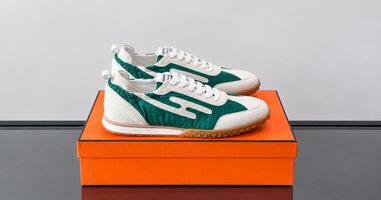
Hermes Jet Sneakers Styling Guide: When Are They Easy to Wear?
Hermes Jet men sneakers work best when the outfit leaves enough room for their layered, retro-influenced profile to register clearly. The easiest styling approach is to control trouser volume, hem position, and contrast around the shoe rather than trying to match every color or material in the upper.
1. What Makes Jet Easy or Difficult to Style?
Jet becomes easier to wear once you treat its profile as part of the outfit rather than as a neutral finishing piece.
The upper contains several visible sections, and the sole adds enough weight to keep the footwear noticeable below the ankle.
Clothing that creates a clear line into the shoe usually works better than pieces that obscure most of its structure.
The main styling question is therefore proportion: how much of the sneaker should remain visible, and how much visual competition should sit directly above it?
2. How Much Trouser Volume Works Best?
Jet’s segmented upper already creates width and movement across the side profile, so trouser volume can either balance that structure or exaggerate it.
A very narrow leg makes the sneaker’s layered construction appear broader by comparison. A straighter lower leg creates a more even transition into the sole and reduces the contrast between trouser width and footwear width.
That does not mean every outfit needs a wide cut. A gently tapered shape can still work when the opening does not visually pinch the sneaker from above.
Judge the transition into the shoe rather than choosing trousers by category name.
3. Where Should the Hem Meet the Shoe?
Hem position can change the entire balance of the lower half.
A clean break near the top of Hermes Jet sneakers keeps enough of the upper visible to show its panel structure while avoiding excessive fabric gathering around the sole. If you are already considering a specific pair, the product page provides the clearest reference for examining the side profile, sole height, and upper proportions before planning outfits.
A longer hem can soften the sneaker’s presence, while a shorter one exposes more of the retro structure. Neither is automatically better; the choice depends on how much attention you want the footwear to carry.
4. Should Socks Be Visible?
Sock visibility can either connect the trouser and sneaker or create another strong visual break.
When the shoe already uses several contrasting sections, a simple sock usually keeps the lower half easier to read. A strongly contrasting sock adds another boundary between trouser and footwear and can make the composition feel busier.
If the trouser hem sits higher, sock color becomes more important because a larger section remains visible during movement.
The safest approach is to decide whether the sock should disappear into the outfit or deliberately become part of it.
5. How Should You Style a Higher-Contrast Version?
A high-contrast pair already carries substantial visual information, so the surrounding clothing does not need to repeat every tone.
Repeating one minor tone can create continuity, but exact matching is unnecessary.
For stronger color combinations, Hermes Jet shoes tend to work better when one or two nearby garments remain comparatively controlled. This allows the footwear to register without forcing the entire outfit into a color-matching exercise.
The cleaner strategy is to decide which part of the outfit should lead visually, then allow the remaining pieces to support that hierarchy.
6. What Changes With a More Tonal Version?
A tonal version gives you more freedom elsewhere because the panel structure remains visible without strong color separation.
That can support clothing carrying more texture, a stronger jacket, or a broader range of trouser colors without making the lower half feel overloaded.
Tonal does not mean invisible. The sole, layered upper, and side construction still contribute character.
The difference is that the shoe communicates more through proportion and surface changes than through sharp color contrast.
7. Can the Shoe Work With Sharper Clothing?
Yes, but the Jet profile needs enough informality around it to avoid a hard contrast between retro-sport footwear and very strict tailoring.
Cleaner trousers, knit polos, compact jackets, or softly structured layers can work because they give the sneaker a defined setting without suppressing its panelled side profile. A Hermes Jet sneaker brings visible athletic references, so the rest of the outfit should acknowledge that rather than trying to disguise them.
Very formal trouser lines and highly polished tailoring can make the transition feel abrupt.
The stronger approach is to keep the upper half refined while allowing enough ease around the lower half for the sneaker’s construction to make sense.
8. When Should the Shoe Become the Main Visual Element?
Let the footwear lead when the clothing above it is comparatively quiet.
A simple trouser line, controlled outer layer, and restrained use of pattern can create enough open space for the sneaker’s panel structure to carry more attention.
If you are still deciding whether that level of presence suits what you want from the model, design decision framework returns to the broader buying logic before you settle on a styling direction.
Once that decision is clear, outfit building becomes easier because you know whether the shoe should lead or support.
9. Which Outfit Direction Makes the Most Sense?
The strongest direction depends on whether you want contrast, continuity, or balance.
A stronger-color version can anchor cleaner clothing, while a quieter execution can sit beneath more expressive pieces without competing as aggressively for attention.
In either case, Hermes Jet men shoes should not be assigned to one fixed dress code. The more useful question is how much work you want the footwear to do inside the complete composition.
That makes the same silhouette capable of behaving differently across several wardrobe directions.
10. What Should Decide the Final Styling Approach?
Start from proportion, then decide visibility and contrast.
Choose trouser volume that does not fight the width of the sneaker. Set the hem so the amount of upper on display matches the effect you want. Then decide whether socks and surrounding colors should connect the lower half or create separation.
Avoid building the outfit by copying every color from the shoe.
The strongest result usually comes from giving the footwear a clear role and allowing the rest of the outfit to support that role.
James Anderson
James Anderson is a luxury footwear writer specializing in designer shoes,fashion craftsmanship,and timeless style.He explores the materials,construction,heritage,and design philosophy behind iconic footwear brands,providing practical insights into choosing and styling luxury shoes for different occasions.His guides help readers understand the details behind premium footwear and how these pieces fit into modern wardrobes.