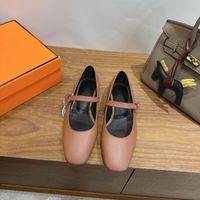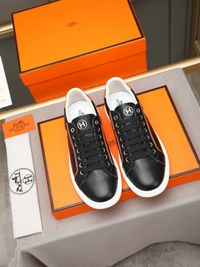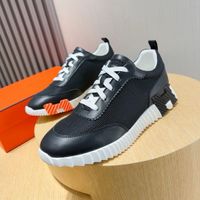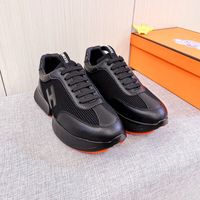
1.Start With the Way They Will Be Worn
Choosing luxury sneakers begins with a practical question:How much movement will the day require?A pair used mainly for driving,short office walks,and dinner can prioritize a clean profile.A pair expected to cover airport terminals,city blocks,and several hours on foot needs more attention to cushioning,flexibility,weight,and heel stability.
The word “sneaker” covers many structures.Some designs use a low leather upper and a slim rubber sole.Others borrow from court shoes through a broader base and more substantial sidewalls.Sport-influenced options may combine mesh,knitted panels,layered uppers,and thicker cushioning.These differences affect appearance,but they also change how the shoe bends,holds the foot,and coordinates with clothing.
A useful pair should remain comfortable through its intended schedule without forcing the wearer to build every outfit around it.That means examining shape,sole,upper,and expected use as one connected decision.
2.Separate Shape From Appearance
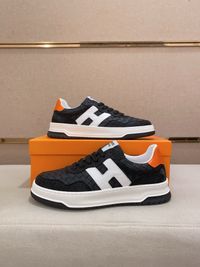
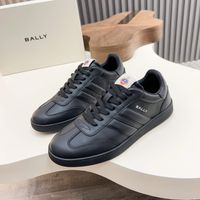
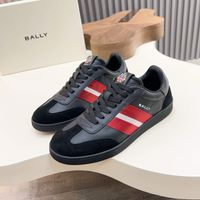
Product images often emphasize color and branding,but the underlying shape has greater influence on comfort and versatility.Within bally men sneakers,three broad profiles can help buyers narrow the selection:low-profile leather designs,court-influenced shoes,and sport-influenced constructions.
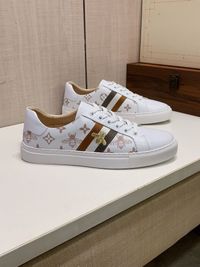
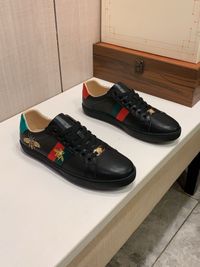
Low-profile leather sneakers have a clean line and usually sit closer to the foot.Their narrow visual shape works well with straight jeans,chinos,and casual trousers.They can also fit many business-casual environments when the color and branding remain restrained.The tradeoff is that a slim sole may provide less impact protection during long walking days.
Court-influenced sneakers tend to have a broader platform,rounded toe,and visible rubber sidewall.They usually feel more casual than a narrow leather design,but the simple geometry makes them easy to coordinate.White,black,and neutral versions can work across a wide range of wardrobes,while contrast panels create a stronger focal point.
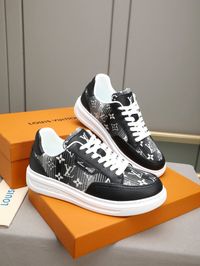
Sport-influenced sneakers use more layered shapes.The heel may appear larger,the sole may rise higher,and the upper may combine several materials.This construction can provide more room for cushioning and airflow,but it also changes outfit proportions.A thick sole works naturally with relaxed denim and roomier trousers but can look heavy beneath narrow dress pants.
Toe shape should be examined separately from overall length.A rounded front may provide more visual and physical room,while a tapered profile can feel restrictive if the widest part of the foot sits too far forward.The shoe should follow the foot’s natural bend rather than forcing the toes into a shape chosen only for appearance.
The side profile offers another clue.A sole that extends beyond the upper creates a broader base.A sole that remains almost flush with the upper produces a cleaner line but may feel less stable during quick direction changes.The better option depends on walking habits,clothing proportions,and the amount of support expected.
Logo placement also changes how the shape is perceived.Tonal details allow the eye to read the complete outline,while high-contrast stripes or lettering divide the shoe into separate visual sections.Buyers seeking frequent wear should decide whether they want the silhouette or the branding to lead the design.
3.Read the Sole From the Bottom Up
The outsole is often the most informative part of a sneaker,but it receives less attention than the upper.A sole image can reveal tread direction,contact area,flex points,and how much rubber reaches the floor.These details help estimate where the shoe is designed to move and how it may behave during ordinary use.
When comparing sole construction across bally shoes for men,look first at the area that makes contact with the ground.A mostly flat outsole creates broad contact and can feel stable on indoor floors and smooth sidewalks.Shallow tread may provide less grip on wet or uneven surfaces,while deeper grooves can channel moisture and allow different areas of the sole to move more independently.
Flex grooves matter near the forefoot because that is where the foot bends during a normal step.If the sole is extremely rigid in that area,the wearer may feel resistance while walking.Too much flexibility through the center can reduce support under the arch.The useful balance allows movement at the front while maintaining reasonable structure through the middle.
Sidewalls provide additional information.A cupsole wraps rubber around the lower edge of the upper,creating a defined sneaker profile and helping protect the connection between upper and outsole.Molded soles may use a more continuous shape with fewer visible joins.The appearance differs,but construction should be judged together with weight,flexibility,and intended use.
Sole thickness does not reveal cushioning by itself.A high platform may contain firm material,while a lower sole may use a softer compound.The insole and internal midsole also influence the sensation underfoot.Product descriptions that identify cushioning materials can help,but comfort should not be assumed from height alone.
Heel geometry affects the first part of each step.A wide heel base can feel stable,while a narrow or heavily sculpted rear may change how the foot lands.A raised collar can improve hold,but its shape must suit the wearer’s ankle.A collar that curves sharply inward may create friction during longer walks.
Weight completes the picture.Heavier rubber can produce a substantial feel,but additional mass may become tiring over a full day.A very light sneaker may feel easy to move in yet provide less structure than some buyers prefer.The purpose of the shoe should determine which balance feels appropriate.
4.Check the Upper and Internal Build
Leather,mesh,technical fabric,and knitted panels behave differently across the foot.Product pages for bally men shoes may identify the main upper material,but buyers should also examine where each material is placed and how the sections connect.
Smooth leather creates a controlled appearance and can hold its shape well.Structured panels around the heel and sides may improve stability,but firm leather across the forefoot can require more adjustment time.The location of stitching matters because a seam placed over a flex point may feel different from one positioned along a less active area.
Suede adds surface texture and can make a sneaker look less formal.It pairs naturally with denim,chinos,and relaxed trousers,but the material needs greater protection from moisture and dirt.Dark suede may conceal ordinary surface changes better than very light shades,although brushing and careful storage remain useful.
Mesh and technical fabric can increase airflow and reduce visual weight.These materials often flex more readily than leather,but flexibility does not guarantee a secure fit.Support may come from overlays,internal reinforcement,or the shape of the sole.A mesh forefoot combined with a reinforced heel creates a different experience from an upper made almost entirely from soft fabric.
Knitted construction can adapt around the foot and reduce pressure from rigid panels.The same adaptability may feel loose to someone with a low-volume foot,especially when the lacing system provides limited adjustment.Buyers should check whether the knit is supported by a structured heel counter or side frame.
The tongue and collar influence comfort from the first wear.A thin tongue can reduce bulk but may allow laces to create pressure across the instep.A padded tongue distributes pressure more broadly while occupying additional internal space.The collar should hold the heel without cutting into the ankle during forward movement.
Internal lining also deserves attention.Leather lining can feel smooth and may adapt with use.Textile lining can reduce weight and alter ventilation.Seams inside the shoe should remain away from areas that experience repeated friction,particularly around the toes and heel.
5.Allow for Model-Specific Fit
Sizing decisions around bally men sneakers should begin with the exact model rather than an assumption about the entire collection.US,UK,and EU conversions provide a reference,but toe shape,lining,material,and padding can change how two designs in the same marked size feel.
Length alone is not enough.The widest part of the foot should align with the widest part of the shoe,and the heel should remain secure without requiring the laces to be pulled excessively tight.A narrow-looking profile deserves closer review,especially for buyers with wide feet or a high instep.
Socks should match the intended use.Thin socks may suit a leather sneaker worn at the office,while a pair used for travel and extended walking may be tried with more substantial socks.Leather can soften modestly with wear,but length will not increase,and a clearly uncomfortable shape should not be treated as a break-in problem.
A later guide in this series will examine size conversion,foot width,instep height,and online fit decisions in greater detail.
6.Test Comfort Against a Real Day
A brief step on soft flooring cannot represent a full commute or several hours in an airport.New sneakers should be tested indoors on a clean surface long enough to reveal pressure,heel movement,and balance.
Begin by standing naturally rather than immediately walking.Check whether weight feels evenly distributed and whether either foot drifts toward an edge of the sole.Then walk at a normal pace,turn in both directions,and use stairs if a clean indoor staircase is available.
Pay attention to specific signals:
Toes should move without striking the front.
The widest part of the foot should not sit above the edge of the sole.
The heel should remain secure without hard friction.
Laces should hold the foot without creating a narrow pressure line.
The forefoot should bend where the foot naturally bends.
The shoe should not feel increasingly heavy after continued movement.
Comfort can change across the day.Feet may expand after standing,walking,or traveling.A pair that feels extremely close during the first minutes may become restrictive later,especially when the upper has firm panels and limited adjustment.
Surface type also affects the test.Soft carpet can hide the firmness of a sole.Hard indoor flooring provides a clearer impression of impact and stability,although outdoor use may make a return impossible.The seller’s conditions should be checked before testing begins.
7.Keep the Wardrobe Test Simple
Sneakers earn more wear when their shape and color fit clothing already in rotation.A low-profile black or dark leather design can work with office trousers,straight denim,and evening outfits.A white court-influenced pair feels more relaxed,while sport-influenced options usually coordinate best with roomier silhouettes.
Sole proportion deserves attention.A slim sole works with narrow or tailored trousers but may disappear beneath wide pants.A thicker outsole balances relaxed clothing and creates a stronger casual impression.Branding changes the result as well.Tonal details are easier to repeat across settings,while high-contrast stripes or large lettering make the shoe a focal point.
Readers comparing work,travel,and weekend combinations can continue with bally men casual shoes for a broader look at occasion-based selection.That guide will move beyond sneaker construction and compare how different casual shoe types function across an American schedule.
Before deciding,name at least five existing outfits that work with the sneaker.If the pair supports only one specific combination,it may operate more like an occasional statement than a dependable part of the wardrobe.
8.Make the Final Choice With Fewer Compromises
Choosing bally men sneakers becomes more manageable once appearance,construction,and use are evaluated separately.A pair should satisfy the most important requirement first,then meet the remaining needs without creating avoidable problems.
For walking-heavy days,place cushioning,weight,traction,and heel security ahead of decorative details.For office use,consider profile,color,branding,and compatibility with trousers.For travel,include removal convenience,luggage space,and the ability to handle several settings.
Review the product page once more before payment.Check the stated materials,sole images,size information,delivery schedule,and return conditions.A missing detail that affects comfort or use should be clarified rather than guessed.
The strongest choice is rarely the shoe with the greatest number of features.It is the pair whose construction matches the day,whose proportions work with the wardrobe,and whose comfort remains convincing after more than a few steps.