
Bally Men Shoes Guide Sneakers for Work,Travel,and Everyday Wear
1.The Fastest Way to Choose
The right sneaker should match the hardest part of the week.A low-profile leather design suits business-casual outfits and polished daily use.A lighter,more flexible pair works better for commuting and travel.A broader sole adds visual weight and may feel steadier,but it is harder to combine with tailored trousers.
Among bally men shoes,sneakers usually offer the strongest balance for modern routines.They provide more underfoot protection than drivers,require less formality than traditional lace-ups,and move easily between work,travel,and weekends.
The best bally men sneakers are not necessarily the most distinctive pairs.The stronger choice supports the longest walking period,works with trousers already in the wardrobe,and remains suitable for the most important setting of the day.
2.Begin With the Routine
Model names and decorative details become easier to judge after the shoe’s role is clear.
A man who drives to work and spends most of the day indoors can prioritize a refined shape and slimmer sole.Someone who walks through stations,airports,or city streets needs better cushioning,heel control,and flexibility.A sneaker used for both office hours and dinner must also sit cleanly beneath chinos or tailored trousers.
Ask:
• How long is the normal commute?
• Does the day involve substantial walking or standing?
• Is the office relaxed or business casual?
• Will the sneaker be worn with
denim,chinos,or wool trousers?
• Does one pair need to cover flights and meetings?
• Is low weight more important than a substantial sole?
A sneaker is versatile when it performs well during the three most common parts of the week.It does not need to suit every possible occasion.
3.The Main Sneaker Types
The category becomes easier to understand when divided by proportion and structure rather than model name.
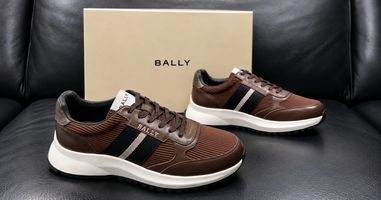
Low-profile leather sneakers have a controlled silhouette and work naturally with narrow or straight trousers.They are often the easiest option for offices,dinners,and understated wardrobes.
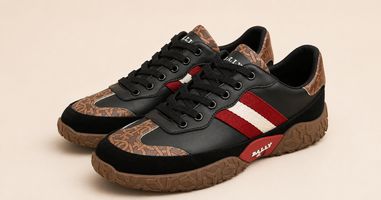
Chunkier sneakers create more visual weight.They balance wider trousers,denim,and casual outerwear,but can feel awkward with tailored clothing.A thicker sole may provide cushioning,although size alone does not prove comfort.
Lightweight sneakers reduce fatigue during travel and active days.Support still depends on the footbed,heel,and sole construction.
Sport-influenced sneakers use mesh,layered panels,or technical soles.They suit casual outfits and movement-heavy schedules but may not enter business-casual settings as easily as clean leather designs.
The starting group should reflect walking demands,wardrobe proportions,and the highest level of formality required.
4.Fit Comes Before Styling
Length is only one part of sneaker fit.Width,instep volume,heel security,and the flex point matter just as much.
A shoe may leave space in front of the toes while pressing against the sides.A narrow heel may lift inside a sneaker that fits through the forefoot.A high instep can make the upper restrictive even when the stated size is correct.
Also consider:
• Whether one foot is slightly longer.
• Whether the forefoot expands during the day.
• Whether thicker travel socks will be worn.
• Whether the heel remains secure on stairs.
• Whether the sole bends near the natural forefoot position.
This is why broad claims such as “runs large” or “true to size” are unreliable across several designs.The same numerical size can behave differently in a slim leather sneaker and a layered sport style.For a closer breakdown,use a detailed bally men sneakers size guide.
5.Low-Profile Leather Sneakers
A clean leather sneaker is usually the strongest option when the shoe must connect casual comfort with polished clothing.
Its restrained upper and narrower sole work with chinos,straight denim,and some wool trousers.The shape fits relaxed offices without looking strongly athletic and usually transitions well into dinner or evening plans.
Low-profile sneakers suit men who:
• Work in business-casual environments.
• Prefer controlled trouser proportions.
• Need one pair for daytime and evening use.
• Walk moderate rather than extreme distances.
The compromise is that a slim sole may provide less cushioning than a travel-focused design.Some leather uppers also need time to bend naturally.
This style is often the most adaptable visual choice,but it is not automatically the best option for demanding walking days.
6.Choosing From the Category
Examine the sole before decorative details.A broader base can feel steadier,while a narrow sole usually appears more polished.The heel should hold the foot without sharp pressure,and the upper should bend without collapsing around the sides.
Leather affects appearance but does not determine the entire wearing experience.A soft upper can sit over a firm sole.A structured upper may feel less flexible initially but hold the foot more securely.
When comparing bally men sneakers,match the proportions to both the wardrobe and the schedule.A slim leather pair suits office-led weeks.A lighter or more cushioned design makes more sense when commuting,travel,and walking dominate.
Choose the pair around the routine already in place,not around occasions that rarely happen.
7.Chunky Sneakers and Visual Balance
A chunky sneaker adds weight to the lower half of an outfit.This works with relaxed denim,wider trousers,or casual layers,but changes the overall silhouette.
The strongest versions balance sole volume with a controlled upper.When both areas are heavily layered,the shoe can dominate the outfit.A cleaner upper makes a substantial sole easier to wear.
Chunkier sneakers can suit:
• Casual offices with flexible dress codes.
• Walking weekends.
• Straight denim and wider chinos.
• Travel outfits built around comfort.
They are less natural with narrow tailored trousers,where a thick sole can make the trouser opening appear too small.
Visual size should not be treated as proof of cushioning.A substantial sole may still feel heavy,firm,or awkwardly positioned beneath the foot.
8.Lightweight Sneakers for Travel
Travel requires one pair to handle walking,waiting,temperature changes,and different surfaces while remaining wearable after arrival.
Lower weight can reduce fatigue,but the shoe still needs heel control and underfoot structure.A very flexible design may feel pleasant during a short fitting yet become tiring after several hours on hard floors.
A practical travel sneaker should provide:
• A stable heel.
• Enough toe room for extended wear.
• A sole that bends at the forefoot.
• A shape that works beyond the airport.
• Materials that do not feel excessively warm.
For business travel,a clean leather or mixed-material sneaker usually works better than a strongly athletic style.For a walking-led holiday,support should take priority over office suitability.
The best travel shoe is not the lightest pair.It is the lightest pair that keeps the foot secure through the longest day.
9.Low-Profile vs Chunky
The decision between a slim sneaker and a substantial one depends on wardrobe shape and daily activity.
Low-profile sneakers usually offer:
• Better compatibility with tailored trousers.
• Easier movement between office and dinner.
• A cleaner appearance.
Chunkier sneakers usually offer:
• More balance beneath denim and relaxed trousers.
• A stronger casual character.
• Better compatibility with layered weekend clothing.
Walking comfort can appear in either group.A slim design may contain supportive internal construction,while a thick sole may feel heavy or rigid.Separate visual volume from functional support.
Men deciding between the two shapes can use the low-profile and chunky sneaker comparison to evaluate sole proportion,wardrobe compatibility,and daily use in more detail.
10.What Comfort Actually Means
A sneaker is not comfortable simply because the upper feels soft during the first few minutes.
Toe space allows the forefoot to settle naturally.Heel security prevents unnecessary movement.Cushioning reduces impact,but excessive softness can feel unstable.Arch support must suit the wearer rather than follow a universal standard.
The sole should bend near the natural movement of the forefoot.If it resists movement or flexes too far forward,the foot works harder.
Weight,breathability,and internal construction also affect the experience.These differences explain why comfort can vary across bally men shoes,especially between slim leather sneakers and more structured sport-influenced designs.
The useful question is whether the foot remains secure,supported,and free from concentrated pressure after the longest realistic period of wear.
11.Sneakers for Walking-Heavy Days
Walking changes the order of priorities.Sole stability,heel control,and natural forefoot movement should come before decorative details.
A walking-friendly sneaker does not need to resemble a running shoe,but it must manage repeated steps on hard surfaces.The upper should hold the midfoot without pressing against the instep,and the toe box should allow the foot to expand.
Useful signs include:
• The heel remains secure when walking quickly.
• The sole bends without forcing the foot to lift as one rigid unit.
• The shoe does not feel excessively heavy.
• The forefoot remains comfortable after several hours.
• Internal seams do not create concentrated pressure.
A broad sole can add stability,but the shoe should not feel clumsy on stairs.A lightweight design can reduce fatigue,but it should not collapse beneath the foot.
12.Work,Walking,and Travel
A sneaker suitable for work may not be the best option for an airport day.A supportive walking shoe may appear too casual beneath office trousers.The right choice depends on which setting creates the greatest problem when the shoe performs poorly.
For work,the upper and sole should remain visually controlled.For walking,the heel and flex point must handle repeated movement.For travel,the design needs support,manageable weight,and broad outfit compatibility.
A balanced pair usually avoids an oversized athletic profile while providing more structure than a very slim fashion sneaker.
Men comparing these demands can consult the comfort guide for walking,work,and travel for a closer assessment of support,flexibility,weight,and all-day wear.
When one sneaker cannot handle both the most active and most formal parts of the schedule,a two-pair rotation is usually more practical.
13.How Sneakers Fit Into Workwear
Office suitability depends on the sneaker and the clothing around it.
In a relaxed workplace,a clean leather or mixed-material design can work with denim,chinos,and casual trousers.A moderately substantial sneaker may also fit when the rest of the outfit remains simple.
In a standard business-casual environment,a low-profile leather sneaker is safer.The upper should be restrained and the sole should not appear strongly athletic.
For client-facing work,the sneaker should support rather than dominate the outfit.A clean toe shape and limited visual layering make it easier to combine with tailored trousers.
Trouser length also changes the result.A short hem exposes more of the sneaker and emphasizes the sole.A longer straight trouser creates a smoother transition and can accommodate slightly greater volume.
14.Business Casual and Everyday Outfits
A practical sneaker should work with clothing already present in the wardrobe rather than requiring new outfits.
Chinos pair easily with clean leather designs.Straight denim can support either slim or moderately substantial sneakers.Wider trousers generally need more weight beneath the hem,while narrow tailored trousers suit a controlled sole.
Useful combinations include:
• Low-profile leather sneakers with chinos and an unstructured jacket.
• Lightweight sneakers with travel trousers and a knit polo.
• Moderately chunky sneakers with straight denim and a simple overshirt.
• Clean monochrome sneakers with relaxed wool trousers.
The sneaker does not need to become the focus of every outfit.It should create the right balance beneath the trousers and remain appropriate for the day’s most important setting.
If the shortlist has narrowed to these two models,the Darsyl Outline vs Manto Runner comparison explains how their platform structure,walking feel,and trouser compatibility differ in daily use.
15.One Pair or a Two-Pair Rotation?
One pair can be enough when the schedule is consistent.
A low-profile leather sneaker may cover commuting,office wear,dinner,and moderate weekend walking.A lighter travel design can cover airports,city movement,and casual days.
The difficulty begins when one pair must solve opposing demands.A slim sneaker may look right at work but lack support for a walking-heavy trip.A technical pair may feel excellent all day but appear too casual in meetings.
Useful rotations include:
• Low-profile leather sneakers+lightweight travel sneakers.
• Clean office sneakers+more cushioned walking sneakers.
• Minimal sneakers+chunkier casual sneakers.
A second pair is not unnecessary duplication when each has a clear role.The most useful bally men sneakers rotation often combines one polished pair with one movement-first pair.
When those two priorities lead to specific models,our Demmy vs Quarry sneaker comparison shows which pair makes more sense for walking-heavy days and which integrates more easily with work and everyday clothing.
16.How Bally Compares With Ferragamo and Tod’s
Brand comparisons are useful only when the same sneaker type and use case are being considered.
Bally covers both restrained leather designs and more substantial sport-influenced shapes.Ferragamo is often considered for polished sneakers that sit close to a business-casual wardrobe,while Tod’s is commonly compared for softer,more relaxed casual styles.
These general differences can help narrow the search,but they should not replace a model-by-model assessment.
Compare individual pairs by:
• Heel stability for walking.
• Toe shape for wider feet.
• Sole volume against existing trousers.
• Weight for travel.
• Upper structure for business casual.
There is no universal winner.A refined office sneaker and a cushioned travel pair solve different problems.For a scenario-based assessment,use the bally,Ferragamo,and Tod’s sneaker comparison.
17.A Practical Decision Map
Choose a low-profile leather sneaker when business casual,dinner,and controlled styling matter most.
Choose a lightweight sneaker when airports,commuting,and long periods of wear dominate.
Choose a broader design when the wardrobe includes straight denim,wider trousers,and casual outerwear.
Choose a sport-influenced sneaker when movement matters more than office formality.
Choose two pairs when the same week combines important meetings with long walking days.
Before deciding,check three things:
• Does the sneaker support the longest active period?
• Does its sole proportion work with existing trousers?
• Is it polished enough for the most important regular setting?
A sneaker that passes only one test may still look appealing,but it is unlikely to become the most useful pair.The strongest choice handles the real routine without requiring the day to be reorganized around the shoe.
Common QuestionsDo Bally Men Sneakers Run True to Size?
There is no single rule for every design.A slim leather sneaker,a layered sport style,and a broader travel shoe can behave differently in length,width,instep volume,and heel hold.The internal shape matters more than a general brand statement.
Are Low-Profile or Chunky Sneakers More Comfortable?
Either can be comfortable.Low-profile designs often feel lighter and work better with tailored clothing,while chunkier sneakers may provide a broader base.Comfort depends on flex,heel security,weight,and underfoot structure.
Which Sneakers Are Best for Work?
A clean leather design with a restrained upper and controlled sole is usually the safest choice.It should work naturally with chinos or tailored trousers without appearing strongly athletic.
Which Sneakers Are Best for Travel?
A light but stable pair is the most practical.The heel should remain secure,the sole should bend naturally,and the shape should work with more than one travel outfit.
Is One Pair Enough?
One pair is enough when work,travel,and weekend demands are similar.A two-pair rotation is more useful when the schedule combines business-casual settings with long walking days.