
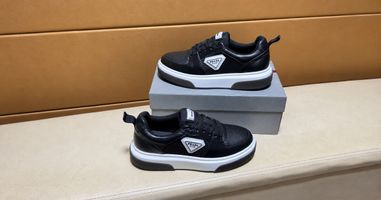
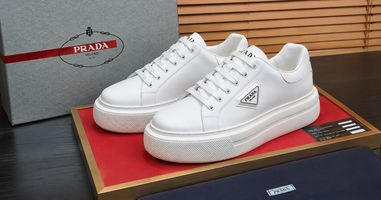
Prada Men Sneakers for Work,Travel,and Weekends
The most useful sneaker for a mixed schedule is not the pair that performs equally in every setting.It is the one that satisfies the strictest regular environment,remains comfortable through the longest active day,and works with the trousers already worn most often.
Among prada men shoes,a restrained leather sneaker usually moves from casual offices into weekends most easily.A mixed-material design becomes more useful when travel and walking dominate.Heavier technical shapes suit wardrobes already built around relaxed tailoring,wider trousers,and visible footwear.Start with the week that exists rather than an imagined need for one shoe to do everything.
1.Start With the Hardest Setting
Weekend clothing accepts almost any sneaker shape.The more useful first test is the least casual place where the pair must still look deliberate.
A business-casual office may accommodate smooth leather,tonal colors,and a moderate rubber sole.A traditional workplace built around suits and formal shoes may leave little room for even a minimal sneaker.The aim is not to disguise an athletic design as formal.It is to avoid choosing a shoe whose materials and proportions contradict the room.
Once that boundary is clear,the weekend decision becomes easier.A sneaker that works beneath office trousers usually moves into denim.A highly technical pair does not always make the journey in reverse.
2.Let Travel Reveal the Physical Demand
Work may determine appearance,but travel reveals whether the shoe remains useful for an entire day.Airports,rail stations,hotel corridors,and unfamiliar streets combine standing,stairs,short bursts of movement,and long periods without a convenient chance to change footwear.
A travel-first pair should feel stable rather than merely soft.Cushioning improves the first impression,but interior movement becomes tiring when the wearer repeatedly changes direction.Weight also matters more after several hours than it does during a brief trial.
Consider whether the sneaker will be worn throughout the journey or packed as a second pair.A bulky outsole takes more luggage space.A slimmer leather design packs more easily,but a smooth surface may need protection from pressure or hardware inside the bag.Fabric and mesh compress more readily and make greater sense in warm conditions.
The whole journey should set the standard,not the few minutes spent crossing an airport floor.
3.Choose the Sneaker Family Before the Color
Different prada men sneakers solve different kinds of weeks.
• A low-profile leather sneaker suits casual offices,short trips,and wardrobes built around straight trousers.
• A mixed-material sneaker serves walking-heavy schedules and relaxed work environments.
• A technical design adds texture,volume,and a stronger athletic identity.
• A substantial rubber-soled sneaker works best when broader trousers and heavier outerwear already shape the wardrobe.
These are not small variations of the same product.A close leather upper and a layered technical construction may share a color while demanding different clothing and expectations.Select the family first.Color becomes useful only after the role is clear.
4.The Office Test Goes Beyond Permission
An office may permit sneakers while certain pairs still feel disconnected from the clothes worn there.A clean upper can remain too heavy when the sole projects far beyond the foot.A technical upper may appear controlled when its colors stay tonal and its base remains moderate.
Place the candidate beneath the work trousers used most often.The relationship at the hem usually reveals more than the shoe viewed alone.
5.Do Not Turn a Travel Shoe Into a Travel-Only Shoe
A sneaker chosen for airports and long walks can become difficult during an ordinary week.Extra cushioning,a large sole,and several breathable panels may perform well in motion but leave the pair dependent on sportswear or highly casual trousers.
Check whether the design can also replace an existing weekend shoe.Could it work for evening shopping,a casual dinner,or an informal meeting?Would it feel natural beneath denim and the outerwear already used outside work?
The strongest travel purchase often includes one or two technical advantages without adopting every athletic signal.A flexible forefoot and stable base can improve movement without bright contrast or dense paneling.A structured heel can provide control while the upper remains restrained.
Frequency changes the answer.A man who travels every week can accept more specialization than someone taking several major trips a year.For the second buyer,the pair still needs to earn most of its use at home.
6.Why Leather Often Covers the Widest Range
For someone comparing prada men shoes across sneakers,loafers,and lace-ups,a restrained leather sneaker often occupies the most flexible middle.It is more relaxed than a formal shoe but easier to place beside tailored trousers than a visibly athletic construction.
Leather alone does not create that range.Panel count,toe shape,finish,and sole edge still control the result.A smooth upper with limited interruption behaves differently from polished leather placed above a deep tread or projecting rubber frame.
Its limitation appears during active days.A firm upper may feel warmer and less flexible than fabric or mesh.Leather works best when work-to-weekend range matters more than maximum airflow.
7.Mixed Materials Should Perform a Clear Job
Leather,fabric,nylon,and mesh should change how the shoe moves,holds its shape,or responds to the expected schedule.
Fabric through the forefoot can reduce resistance during repeated walking.Mesh improves airflow.Leather around the rear can preserve structure.Rubber overlays protect areas likely to meet luggage,steps,or crowded city surfaces.
The same materials divide the upper visually.Seams create direction,and contrast panels can make the foot appear shorter,wider,or more athletic.Tonal combinations preserve technical detail without allowing every section to compete.
For work and travel,the most adaptable mixed-material designs place performance details where they are useful while keeping the overall color controlled.For weekends,the construction can speak more loudly.
A closer look at how material placement changes sneaker structure can help explain why two mixed-material designs perform so differently.
8.Read the Sole Before the Logo
The outsole quickly reveals how easily a sneaker will move between settings.A close-cut base keeps the foot visually near the ground.A rounded athletic sole introduces more movement.A projecting edge increases the total area of the shoe,while a deep tread adds further weight.
Thin is not automatically more versatile.A broad trouser can make a narrow sneaker appear undersized,while a stronger base may provide the balance the outfit needs.The sole should answer the proportions already present in the wardrobe.
9.Decide Which Setting Gets Priority
Work,travel,and weekends do not need equal weight.
• Work first a controlled upper,moderate sole,and low material contrast.
• Travel first weight,flexibility,airflow,and stability.
• Weekend first stronger texture,volume,and visible construction.
• Balanced schedule one dominant feature and restrain the others.
A balanced design is not a sneaker without character.Its strongest feature simply supports the most important part of the week.
10.Consider the Transitions Within One Day
A mixed schedule does not always divide into separate work,travel,and weekend days.A commute may lead directly into an office.A flight may be followed by a meeting.A walking-heavy Saturday can end at dinner without time to return home.
Those transitions expose an overly specialized shoe.The best option does not need to be perfect at every stop.It should avoid becoming clearly wrong when the setting changes.
11.Color Controls How Strongly the Construction Speaks
Black can look polished on smooth leather,flat and technical on nylon,or softer on suede.White reveals panel lines,sole thickness,and every change in material.Gray,navy,and muted green reduce contrast while preserving the identity of a layered upper.
A tonal design can make a large construction easier to place beneath work trousers because the eye reads one continuous shape.Contrast around the outsole divides the shoe horizontally and emphasizes thickness.A smaller contrast panel adds interest without enlarging the whole silhouette.
When viewing prada sneakers for men,judge color after structure.A black technical sneaker does not automatically become restrained,and a white leather pair does not automatically become difficult.The location of contrast matters more than the color name.
12.Cushioning Cannot Decide the Purchase
A strongly cushioned sneaker may suit travel while creating too much volume for work clothing.A sleek leather design may enter the office easily yet become tiring during a walking-heavy trip.
The choice must satisfy physical and visual demands according to the buyer's priorities.Improving only one side usually leads to carrying another pair or avoiding certain settings.
13.Use Three Existing Trousers as the Final Filter
Choose the most frequently worn work trouser,the pair used during travel,and the denim or casual trouser worn most weekends.Place each candidate beneath all three and look from the front and side.
The front shows whether the shoe creates too much width beneath the hem.The side reveals heel height,toe lift,and the extent of the outsole.A pair may work with two trousers and fail with the third.That can still be acceptable when the third setting has low priority.
This test keeps prada footwear connected to clothes already earning regular use.A neutral color does not make a sneaker versatile when its proportions require a different wardrobe.
14.Foundation or Statement?
A foundation sneaker resolves a repeated problem.It may replace an athletic pair that feels too casual for work,provide a more comfortable alternative to loafers,or reduce the need to pack multiple shoes.
A statement sneaker changes the proportion and mood of familiar clothing.A strong sole can give simple trousers more presence,while a layered upper adds texture to a restrained wardrobe.The mistake is buying a statement design and expecting it to behave like an invisible foundation.
15.The Best Pair Reduces Daily Friction
The best choices among prada men sneakers for work,travel,and weekends are not necessarily the designs that can technically enter the greatest number of places.They are the pairs that reduce repeated decisions without creating an obvious compromise.
When the strictest setting,the longest active day,and the existing wardrobe all point toward the same design,the sneaker can move through a mixed week without feeling generic or overly specialized.