
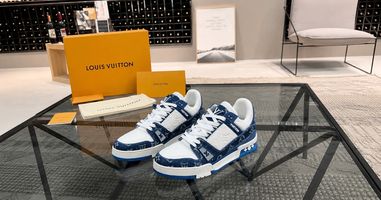
LV Trainer vs Beverly Hills:Which Pair Covers More of the Week?
LV Trainer and Beverly Hills can both cover everyday use,but they do it in different ways.The better choice depends on trouser structure,daily transitions,and how much sneaker presence the wardrobe can carry.Among louis vuitton men shoes,that difference matters more than simply choosing the pair that appears more versatile.
LV Trainer brings a more structured,recognizable sneaker profile.Beverly Hills combines greater sole volume with a lighter construction.The stronger weekly option is the one that creates fewer conflicts across the clothes and situations that repeat most often.
1.These Two Sneakers Solve the Middle of the Wardrobe Differently
LV Trainer and Beverly Hills can both sit inside an everyday rotation,but they cover that middle ground differently.
Use a Weekly-Coverage Test.
Instead of asking which pair works with the greatest number of outfits in theory,ask how often each one forces a change in trousers,formality,or the rest of the outfit.
A sneaker that works across five realistic days has more useful range than one that repeatedly needs the clothing around it to change.
Which pair needs fewer exceptions during a normal week?
2.Start With the Trousers Worn Most Often
When considering LV Trainer for everyday wear,trouser structure can narrow the choice before comfort or color enters the comparison.
Straight trousers expose the relationship between sole volume and upper structure more clearly.Chinos can reward a cleaner transition,while regular or wider denim can absorb more sneaker presence.
The issue is not whether a shoe looks large or small by itself.It is whether the amount visible beneath the trousers feels intentional.
A pair that works under wider denim may need more adjustment with cleaner trousers,and the reverse can also happen.
3.LV Trainer Works Better When the Shoe Can Carry More Character
This model makes the stronger case when the wardrobe allows the sneaker itself to become a visible part of the outfit.
Its structured upper and basketball-derived character give it more presence than a very understated everyday shoe.That can work well with denim,casual trousers,and combinations where the footwear is expected to contribute rather than disappear.
This does not automatically make LV Trainer more versatile.Its advantage appears when the clothing leaves enough room for a sneaker with stronger character.
If most outfits depend on quiet footwear,the same quality can become a source of friction.
5.The Better Everyday Pair Depends on How Much Shoe the Outfit Can Carry
Some sneakers work best when the shoe is allowed to take up more visual space.Others fit better when trousers,jackets,or knitwear already provide most of the structure.
Use a Sneaker-Presence Budget.
If the outfit includes wider trousers,heavier fabrics,or several strong elements,the shoe may need to contribute less.If the clothing is simpler and the lower half has enough room,a more noticeable sneaker can add direction.
The question is not which pair is more expressive.It is whether the wardrobe has room for that expression.
6.Lightweight Does Not Automatically Mean Broader Range
Among louis vuitton men shoes,the options at https://www.aomzi.com/products/louis-vuitton-men-shoes can differ considerably in sole volume and construction,so a lighter build does not automatically make a shoe easier to style or broader in weekly use.
Physical lightness and wardrobe lightness are different things.
Construction can show differences in sole profile and weight-saving design,but it cannot establish long-day comfort.A real comparison would still need heel-hold,forefoot-flex,shoe-weight,and extended-walking checks before either pair is described as more comfortable.
A sneaker can feel less demanding on foot while still carrying substantial sole volume beneath trousers.It can work well casually without becoming the stronger option for cleaner work or dinner combinations.
Weight influences use.It does not decide proportion,formality,or wardrobe range by itself.
7.The Midday Outfit Test Separates Them Better Than the First Outfit
The first outfit is often too easy.
Use a Midday Outfit Test instead.
Start with the morning combination,then consider what remains after a jacket comes off,the day becomes more casual,or the upper half loses some structure.
A pair that only works when the full outfit stays intact has less real range than one that remains convincing after those changes.
The better weekly shoe should survive ordinary shifts without asking the rest of the outfit to compensate for it.
8.Use the Cleaner Half of the Wardrobe as the Stress Test
Two sneakers can appear equally versatile until they are tested against the cleanest part of the wardrobe.
Use straight trousers,clean chinos,fine knitwear,and understated jackets.
The goal is not to force either sneaker into formal clothing.It is to identify where each one starts to look heavier,more casual,or more dominant than the outfit can support.
That defines the upper end of its usable range.
If one pair repeatedly feels too sneaker-heavy beneath cleaner clothing,that matters more when polished casual settings occur often.
9.Use Wider Denim as the Reverse Stress Test
Now reverse the test and see how louis vuitton men sneakers behave beneath wider denim,heavier casual trousers,and roomier proportions.
A sneaker that looked balanced under cleaner trousers may become too quiet once the clothing gains more scale.Another may make more sense because its sole and upper have enough surrounding volume.
Together,Sections 8 and 9 create a Two-End Wardrobe Test:
• cleanest realistic outfits
• most casual high-volume outfits
The pair that survives both ends with fewer corrections has the stronger claim to weekly coverage.
10.First Pair and Rotation Pair Can Produce Different Winners
The result can change depending on what already exists in the rotation.
For a first pair,weekly coverage deserves more weight.The shoe should work across enough trousers and recurring situations to become a frequent option.
For a later pair,the priority may shift.Someone who already owns a clean,quiet sneaker may benefit more from stronger presence.Another person may already have heavier casual shoes and need something easier beneath cleaner clothing.
The winner depends partly on whether the purchase is filling the middle or adding a missing direction.
11.Do Not Decide From the Sole Alone
The sole is easy to notice,but it should not control the entire comparison.
When assessing louis vuitton sneakers for men,look at the relationship between:
• upper structure
• sole volume
• heel area
• trouser opening
• how much of the shoe remains visible while standing
A substantial sole can work when the upper and trousers support it.A cleaner-looking sole does not guarantee broader range if the rest of the sneaker still conflicts with the wardrobe.
Judge the full profile rather than one feature in isolation.
12.Test the Pair Against the Most Common Three-Day Sequence
A single outfit test is too limited for a shoe expected to cover much of the week.
Use a Three-Day Sequence Test:
Day 1:casual everyday use
Day 2:cleaner work,lunch,or daytime plans
Day 3:weekend clothing with heavier or wider denim
Now ask which pair needs fewer substitutions.
One sneaker may dominate one day but require another shoe for the other two.A different pair may be less specialized yet cover all three with fewer compromises.
That difference is what weekly range actually means.
13.Choose by the Compromise You Will Notice More Often
LV Trainer is more likely to fit someone who:
• wants the sneaker itself to carry more character
• wears denim and casual trousers frequently
• needs broad casual coverage
• is comfortable letting the shoe remain visible in the outfit
Beverly Hills is more likely to fit someone who:
• prefers more obvious sole volume
• wants that volume without assuming a heavy physical feel
• spends more of the week in casual combinations
• has trousers that can support a more substantial lower profile
Neither list creates an automatic winner.
The better choice depends on which compromise appears more often in the actual rotation.
14.The Better Pair Is the One That Needs Fewer Exceptions
Between these louis vuitton men shoes,the stronger weekly choice is the pair that needs fewer exceptions.
LV Trainer makes more sense when structured sneaker character fits the wardrobe across several casual settings.Beverly Hills becomes more convincing when greater sole volume suits the clothing and its lighter construction supports repeated use.
Combine the Weekly-Coverage Test with the Two-End Wardrobe Test.
If one pair repeatedly needs different trousers,a more specific outfit,or another shoe to fill the gaps,that restriction matters more than a single feature it wins.
The better pair is the one that fits more of the real week without asking the wardrobe to reorganize around it.
James Anderson
James Anderson is a luxury footwear writer specializing in designer shoes,fashion craftsmanship,and timeless style.He explores the materials,construction,heritage,and design philosophy behind iconic footwear brands,providing practical insights into choosing and styling luxury shoes for different occasions.His guides help readers understand the details behind premium footwear and how these pieces fit into modern wardrobes.