
1.Give the Short Answer First
There is no universal best first pair.Buy the pair that fills the clearest gap in the week.If most days involve commuting on foot,travel,weekend plans,or a relaxed workplace,start with a sneaker.If the calendar moves between an office,lunch,and dinner without becoming fully formal,a loafer will probably work harder.If suits,client meetings,ceremonies,or traditional evening dress appear regularly,dress shoes deserve priority.
The answer is less about ranking styles than matching a real schedule.An appealing design may still be a poor first purchase when it spends most of the month waiting for the right setting.
Choosing hermès men shoes begins with a simple inventory:What do the shoes already owned handle well,and where does the rotation fail?One man may have casual footwear covered but rely on an aging formal pair.Another may own several polished options yet have nothing he wants to wear through an airport and a full day in the city.Their first purchases will naturally be different.
When two needs seem equal,start with frequency,then consequence.A weekly need normally wins,but a rarer one can move ahead when getting it wrong would matter at work or at an important event.
2.Identify the Missing Role
Give every regularly worn pair a job rather than a style category:“long walking days,”“ordinary office hours,”“dinner after work,”or “formal events.”This reveals more than counting how many shoes are in the closet.
Different-looking pairs often perform the same job.Two casual designs may suit Saturday but fail at a presentation.A black lace-up and a dark brown lace-up may cover the same professional clothing while travel remains unsupported.The selection looks varied until measured against the calendar.
Describe the missing role before naming a shoe.“Something I can wear for three office days and continue into dinner” leaves room to compare a loafer with a restrained sneaker.“I need a brown loafer” assumes the category before the problem is clear.
A useful first purchase has a one-sentence assignment.If it sounds vague,such as “for when I want something different,”the need is probably not urgent enough to lead.
3.Separate Replacement From Expansion
There are two reasons to buy:restore something that is failing or cover something new.A replacement answers proven demand.An expansion responds to a change in work,travel,clothing,or social life.Confusing them often sends an occasional design ahead of a pair that would be used immediately.
That distinction changes how a collection is viewed.Open hermès men shoes with the missing role already defined,and it becomes easier to pass over designs that repeat what is currently owned.
Try the disappearance test.If the oldest daily pair vanished tomorrow,would the week become difficult?A yes indicates replacement.If the schedule would continue normally,the proposed purchase is probably an expansion and needs to compete with every other uncovered role.
Replacement does not mean buying the same style again.A former office shoe may have suited a stricter workplace,while today's schedule could favor a loafer.The need can remain constant even when the most useful category changes.
4.Count What You Actually Wear
Memory gives too much weight to unusual events.A two-week wear record is more reliable.Note what was worn each day,how long it stayed on,and whether a change became necessary.Then review the next thirty days for known meetings,trips,dinners,and celebrations.
Patterns appear quickly.Three days of walking between transit and an office carry more purchasing weight than a formal invitation with no date.A pair that can enter next Monday's routine has a stronger case than one intended for a version of life that has not arrived.
Unused shoes also provide evidence.They may require trousers that rarely leave the closet,feel wrong for most plans,or duplicate an easier pair.That says more than assuming another purchase will create reasons to dress differently.
Count weekends separately from weekdays.Two uses every weekend become eight or nine uses in a normal month.That can make a casual need more important than a weekday gap that occurs only once.
5.Decide Whether Color Changes the Priority
Color matters after the correct category has been established.A man may already own the right type of shoe but lack a shade that works with the clothing he reaches for most.In that case,color can expand coverage without adding another category.
Black generally reads as more formal and direct.Dark brown often moves more easily among navy,gray,olive,and less traditional combinations.Neither is automatically the better first choice.The useful shade is the one that removes a current limitation.
Take the likely trousers and jackets out of the closet and compare them together,preferably in daylight.This small check is more revealing than imagining combinations one at a time.If the proposed color depends on clothes that are rarely worn,it will not rescue an otherwise weak purchase.
If color is the last unresolved issue,choosing black or brown for a first pair gives that decision a closer look through clothing,setting,and expected use.
A second dark shade can be worthwhile,but only if it changes the range of combinations.A brown pair that serves exactly the same dates as an existing black pair may be visually different without being the most useful next step.
6.Know When Casual Use Comes First
Movement can settle the first-pair question quickly.Someone who walks from transit to work,spends weekends across town,and travels several times a month has recurring demands that formal footwear will not cover well.A casual option is not merely the relaxed choice in that schedule.It is the practical base of the rotation.
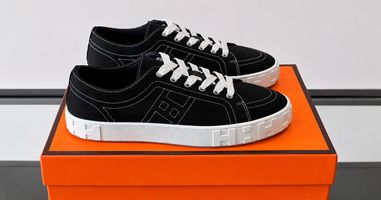
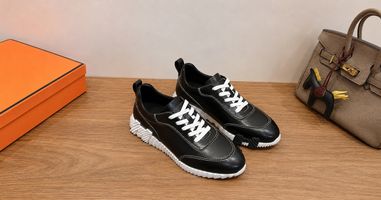
Hermès men sneakers make the strongest first purchase when polished footwear is already available but active days still rely on a pair that feels out of place,has become unreliable,or cannot move naturally between travel and everyday plans.
Fit can overrule the category on paper.A wide forefoot,high instep,or narrow heel can make two shoes in the same labeled size behave very differently.Check toe room,pressure across the top of the foot,heel hold,and the location of the forefoot bend.Do not assume that a familiar EU size will feel identical across every model.
The opposite is also true.If two or three casual pairs already handle those days,another sneaker may add a new appearance without changing what the owner can do.The category deserves priority only when it fills a gap or replaces something used heavily.
Judge a commuter sneaker across a full day.Distance,pace,weather exposure,and clothing matter more than five minutes in front of a display.
7.Recognize the Flexible Middle
Many men spend most of the week between casual and formal.A workplace may allow tailored trousers without requiring a suit.Dinner may call for more intention than weekend clothing but not a traditional lace-up.This middle ground gives loafers unusual reach.
Hermès men's loafers can make sense before either extreme when they remove the need to change shoes between office hours and evening plans.They also work well for a rotation that already contains a dependable sneaker and one formal option but lacks anything between them.
Their convenience is useful,but slip-on construction alone is not a reason to lead with the category.The surrounding design still has to match the clothing and environments in which it will appear.
A loafer loses priority when the week involves long distances,very casual clothing,or a strict professional code.It may then become an excellent second pair.Its strength is range within the middle,not replacing every other type of footwear.
8.Compare the Two Most Practical Starting Options
Sneakers and loafers often become the final two candidates because both can receive immediate wear.The dividing line is not simply casual versus smart.It is movement versus transition.
Consider a man who takes a train,walks twenty minutes each way,and works in a relaxed studio.His sneaker may be worn from the morning commute through dinner without creating a problem.Now consider someone who drives to an office,meets clients informally,and often goes straight to a restaurant.A loafer may cover more of that day even if it appears less casual.
Models within the sneaker category still serve different jobs.The Bouncing model suits walking,travel,and relaxed clothing.Day has a more structured appearance for men who want a sneaker closer to polished daily clothing.The schedule and fit still decide between them.
Outfit count can mislead.A shoe may coordinate with ten combinations but fail the activity attached to eight of them.Duration,distance,dress expectation,and changes of setting belong in the same decision.
The sneaker-versus-loafer buying comparison is useful when both categories would receive similar monthly wear and the remaining difference comes down to how the day is structured.
If the choice is still close,count transitions.A schedule that repeatedly moves from relaxed to polished favors the loafer.A day that stays casual but involves sustained movement favors the sneaker.
9.Move Formal Needs Higher When Necessary
Formal footwear is easy to postpone when it does not appear every week.That changes with a date,a workplace rule,or a recurring professional setting.A scheduled ceremony carries more weight than a vague future use.
Hermès men's dress shoes belong first when no dependable option works with traditional tailoring or a stricter business environment.Waiting until the week of a presentation or event narrows the decision and leaves little time to wear the shoes under ordinary conditions.
Frequency still matters,but it is not the whole calculation.A monthly client meeting may carry more consequence than several casual evenings.If the wrong footwear would create a clear mismatch,the formal role can outrank a category expected to receive more total wear.
When an existing dress pair remains suitable and reliable,the urgency drops.That leaves room for a sneaker or loafer to solve a larger weekly problem without abandoning formal coverage.
10.Choose Broad Coverage or a Specialized Role
A small rotation benefits from broad coverage.The first addition may need to handle work,travel,and an informal dinner rather than excel in one narrow setting.With more pairs already in use,ordinary days may be covered and a specialist need can move forward.
Imagine owning one serviceable sneaker and one formal lace-up.A loafer could widen the middle of the week more than another version of either existing pair.Now imagine the same rotation before a new job with a strict dress code.The specialist formal need suddenly becomes more important than general versatility.
No single design has to cover everything.A polished sneaker may work at dinner without becoming a dress shoe.A loafer may suit many offices without replacing footwear required for a formal ceremony.Accepting those limits produces a more honest purchase order.
Before giving a specialist priority,check for a credible substitute.If an existing pair handles the rare setting without looking forced,the purchase can wait.If nothing comes close,the lower-frequency need may still deserve attention.
11.Decide Between One Pair and Two
One pair is enough when a single need clearly dominates.It also shows how the new shoe behaves before another decision is made.What appeared to be the second priority may change after six weeks of wear.
Two pairs become reasonable when the calendar contains opposing demands.A week split between extensive walking and formal client work is difficult to serve with one compromise design.The sneaker and dress shoe have separate assignments,and both can justify their place.
Write one sentence for each proposed purchase:“for commuting and travel” and “for suits and presentations” describe a complementary pair.“For casual office days” and “for relaxed work clothing” probably describe duplication.
When both gaps are genuine,the guide to whether one pair of hermès sneakers is enough can help distinguish a complementary purchase from another pair performing the same job.
Even then,the pairs need not be bought together.Start with the urgent one,wear it through the intended schedule,and reassess.The second decision can address what remains missing.
12.Remove Functional Duplication
Duplication often hides behind color,material,or decorative detail.A low-profile sneaker and a more expressive sneaker can still be reserved for the same Saturdays.Two loafers may both appear with identical office trousers and never change where the owner can go.
While comparing Hermès shoes for men,ignore visual differences for a moment.Give each candidate a job.If the new description is indistinguishable from one already assigned to another pair,the purchase adds choice but not coverage.
One exception matters.A second pair in a category worn constantly can share the workload and allow time between wears.That is practical rather than unnecessary repetition,provided both continue to be used.
A design bought for a hypothetical new style may remain unused while an ordinary need persists.The next purchase can be distinctive,but it needs a purpose beyond looking different from what is already owned.
13.Apply a Real-Use Priority Test
When several candidates remain,score them against the same five questions:
• How many days would this pair be worn in a typical month?
• Is there a dated or recurring need for it?
• What new setting does it cover?
• How much of the current clothing works with it?
• Would using it require another purchase or a change in routine?
Use 0,1,or 2 for each answer.A shoe expected to appear ten times a month,cover an unmet need,and work with existing clothing will usually rise.A pair that depends on new trousers and one possible event will fall.
The score exposes the reasoning;it does not choose automatically.A formal pair may receive fewer wear marks yet remain first because its deadline and consequence are high.
Add a sentence beside every zero.If the explanation repeatedly relies on “later,”“maybe,”or “with something new,”the purchase is being supported by expectation rather than present use.
14.Check Whether an Existing Pair Is Finished
Replacement deserves a condition check.A shoe is not finished merely because it is familiar,and visible age does not always stop it from doing its job.Ask whether it remains dependable for the time,distance,and dress level involved.
Uneven wear,poor grip,a damaged closure,or a shape that no longer sits properly in its main setting can turn replacement into the immediate need.Cosmetic changes that do not interfere with use may be less urgent.The distinction keeps mild dissatisfaction from becoming an automatic reason to buy.
The practical thresholds in the replace-or-add decision guide help when an older pair still looks usable but no longer feels reliable across a complete day.
Sentiment can distort the decision.An old favorite may stay too long,while a useful pair may be retired because something new is appealing.Can it still complete its assigned day without a backup plan?
A replacement can improve the rotation while keeping the same basic role.It does not need to reproduce every feature of the old shoe.It needs to preserve the useful part of that role and remove the limitation that made the change necessary.
15.Build the Purchase Order
After the first role is settled,arrange the next two purchases before making any of them.For a casual-heavy schedule,the order may be sneaker,loafer,then dress shoe.An office-centered week may begin with a loafer,add formal footwear,and leave the sneaker for third.A traditional professional routine may start with the dress shoe and reverse the rest.
This sequence gives each stage a purpose.The first pair repairs the largest weakness.The second widens the range.The third handles a specialist setting or shares the workload of the category used most.
Planning hermès men shoes as a sequence also reduces impulse duplication.A candidate that looks attractive today may belong later once its relationship to the first pair is clear.
Write a short job beside every position and revisit the order after several weeks of wear.A promotion,new commute,more travel,or changed dress expectations can move one category forward.The sequence is a working plan,not a promise to buy all three.
16.Create a Three-Pair Rotation
A useful three-pair rotation is built around separate jobs.One supports active daily use,a second bridges relaxed and polished settings,and a third handles the formal end of the calendar.The categories can change,but their responsibilities should remain clear.
The pairs do not need equal wear.A sneaker might appear four days in one week,while a dress shoe appears twice in a month.Balance comes from covering necessary settings,not forcing identical use.
Color follows the same logic.A coordinated group is appealing,but three dark shoes with overlapping roles offer less practical range than three well-chosen designs that work with the clothes already owned.
Once the first purchase has proved its role,building a practical three-pair rotation becomes the natural next step for filling the remaining gaps without repeating the same category by default.
Leave room for change.A loafer may become the most-used pair after a workplace shift,or travel may push a second casual option forward.A sound structure can absorb either without making earlier purchases irrelevant.
17.Confirm the First Purchase
Test the final candidate indoors on a clean,non-abrasive surface while wearing the socks normally used with that type of shoe.Walk,turn,and pause on each foot.Check for toe compression,instep pressure,heel lift,and rubbing at the flex point.A pair that feels acceptable while standing still may become the wrong first purchase once movement exposes the fit.
Before deciding,ask:
• How many times will this pair realistically be worn next month?
• Which existing problem does it solve?
• Is it replacing a proven role or creating a new one?
• Does another owned pair already do the same job?
• Can it work with current clothing immediately?
• Is there a known date or professional reason behind the purchase?
• Will the next pair complement it rather than copy it?
• If only one new pair could be kept,would this still be the choice?
The first purchase does not need to cover every setting.It needs to improve the real week.A strong choice enters use quickly,has a clear assignment,and makes the next decision easier.That is how a rotation grows with purpose:one solved problem at a time,rather than one attractive variation after another.