
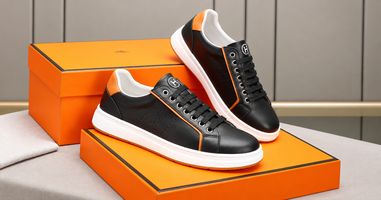
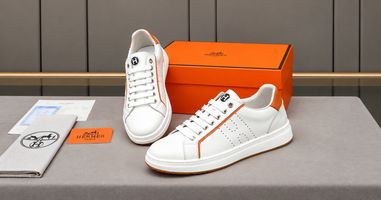
A good fit in Hermes Day sneakers depends on more than having enough room in front of the toes. Upper structure, instep contact, heel control, forefoot flex, and lace tension all need to work together without one area compensating for another.
That makes the Day easier to assess by movement and pressure distribution than by a size number alone. A pair can feel correct in length yet still sit poorly across the top of the foot or move too freely at the heel.
1. Separate Length From Overall Hold
Start by checking whether the foot sits in the correct position before deciding that more or less length is needed. Extra space in front does not automatically mean the shoe is too large if heel movement remains controlled and the forefoot bends where it should.
The opposite can also happen. A pair may look correct from the outside yet hold the foot too firmly across one section of the upper.
Treat length as one part of the decision rather than the final answer. A better fit keeps the foot stable while allowing a normal stride without concentrated pressure.
2. Instep Pressure Can Distort the Size Decision
A structured leather upper makes instep contact easier to notice than it might be in a softer sneaker. Someone with more volume across the top of the foot may feel pressure before toe space becomes an issue.
This is one reason Hermes Day men shoes should be assessed while standing as well as walking. Weight changes how the foot spreads and can make an acceptable seated fit feel different once movement begins.
Do not assume that going up in length will always solve pressure across the instep. More length can introduce heel movement while leaving the original contact area only partly improved.
A better result keeps the upper secure without creating a single pressure zone that dominates every step.
3. Forefoot Room Should Be Checked During Flex
Forefoot space is most useful when judged while the shoe bends. Standing still may not reveal whether the leather restricts movement once the toes and forefoot begin to flex.
Take several normal steps and notice whether the upper follows the bend or resists it sharply. Mild structure is expected from smooth leather, but the foot should not feel trapped every time it rolls forward.
A size that feels spacious while standing can still be restrictive during movement, which is why static toe clearance tells only part of the story.
4. Heel Control Depends on How the Upper Holds the Foot
Heel fit is easier to judge when the rest of the upper is already sitting correctly. If the instep and midfoot are stable, the back of the shoe should remain controlled without needing excessive tension elsewhere.
That makes Hermes Day shoes different from a fit decision based only on whether the heel lifts. A small amount of movement can matter less than an upper that fails to keep the foot positioned consistently from step to step.
If tightening one section noticeably changes pressure in another, check the overall volume match before assuming the heel itself is the problem.
The goal is not maximum tightness. It is a foot that stays centered as the leather flexes and the stride moves forward.
5. Buckle Position Changes Where Pressure Is Noticed
Front hardware adds another structural element across the upper, so pressure can feel more localized than it does in a simple lace-up construction.
Pay attention to whether discomfort comes from leather tension, lace tension, or the area around the closure. Those are different fit signals and should not automatically lead to the same size adjustment.
6. Lace Tension Should Solve One Problem Without Creating Another
Laces are useful for refining hold, but they should not be asked to correct a fundamentally poor fit.
Tightening the upper may reduce movement on a lower-volume foot, yet excessive tension can make the instep feel compressed. Loosening the same area may improve pressure while allowing the heel to move more freely.
The best adjustment sits between those extremes: enough control to keep the foot stable, but not so much that the laces become the main source of discomfort.
7. Compare Sizes Under the Same Conditions
Trying two sizes is only useful when both are tested in a similar way. Use the same sock thickness, lace tension, standing time, and short walking pattern so one pair is not being judged under easier conditions than the other.
When comparing Hermes Day sneakers, the exact version matters too. Keeping https://www.aomzi.com/products/hermes-day-men-shoes-casual-sneaker-hoa09 open while checking each size makes it easier to confirm the pair being considered without interrupting the fitting process.
A useful comparison asks which size requires fewer compromises. One pair may offer more space but introduce movement, while another feels secure yet creates concentrated pressure.
Neither advantage should be judged in isolation. The better option is the one that keeps the foot controlled without shifting the problem to another area.
8. A Good Fit Should Become Easier to Read After Several Minutes
Initial firmness does not automatically mean the size is wrong. Structured leather can feel more defined during the first few minutes than a softer upper.
What matters is whether the foot begins to move more freely without losing control. If the shoe settles around the foot while pressure remains evenly distributed, that is a better sign than immediate softness combined with excess movement.
Persistent discomfort in exactly the same area deserves more attention, especially when normal lace adjustment does not change it.
9. Fit Can Change Later in the Day
Feet can occupy slightly more volume after hours of standing and movement, so a pair that feels exact early in the day may become more restrictive later.
This matters most when the upper already sits close across the instep or forefoot. Extra length is not automatically the solution because it can change how securely the rest of the shoe holds the foot.
Someone assessing Hermes Day men sneakers should pay attention to areas that already feel close during the initial fitting. Mild contact leaves more room for later change than a section that already feels compressed.
A fit that remains balanced once the foot has been active is more informative than one judged only when foot volume is at its lowest.
10. A Correct Fit Can Still Be the Wrong Match
Sometimes length, heel hold, and forefoot space are all acceptable, yet the shoe still feels more structured than the wearer prefers. That is not necessarily a sizing problem.
Day has a firmer leather-led character, so someone accustomed to soft, flexible sneakers may interpret normal structure as poor fit even when the measurements and movement are working properly.
For a wider look at how that fit connects to regular wear, sole presence, and the overall character of the model, Day everyday-wear assessment provides the broader context.
11. Break-In Should Not Be Expected to Fix Structural Pressure
Leather will respond to repeated movement, but that does not mean every uncomfortable area should be accepted in the hope that it disappears later.
For Hermes Day sneakers, a reasonable starting fit should already allow the foot to move without sharp pressure, excessive heel lift, or obvious restriction across the forefoot.
Gradual softening may improve familiarity and flex, but it should refine an already workable fit rather than rescue one that feels fundamentally wrong.
12. Make the Final Decision From Repeatable Signals
Before settling on a size, repeat the same short sequence: stand normally, walk at an ordinary pace, turn, flex through the forefoot, and then reassess instep and heel control.
One isolated sensation should not outweigh everything else. A pressure area that returns during the same movement is more useful information than brief firmness that disappears as the shoe flexes.
The better size should keep movement predictable without demanding constant adjustment.
If both options repeatedly create the same compromise, changing size may not solve the underlying fit issue.