1. What Should You Know Before Choosing a Size?
Prada Cloudbust Thunder sneakers should be sized by how the foot sits inside the structured upper rather than by how large the sneaker appears from the outside. The oversized sole can exaggerate exterior volume, so visual scale is not a reliable reason to move up or down.
Start by checking whether the heel remains controlled and whether the forefoot sits comfortably without concentrated pressure. Someone between sizes should compare those two sensations before focusing on the number printed on the box.
2. Why Can the Same Size Feel Different From a Lighter Sneaker?
The construction changes the first impression.
A lightweight knit sneaker can bend quickly around the foot, while a design supported by molded rubber and a much larger base may feel more substantial from the first step. That extra structure can be mistaken for tightness even when the internal length is suitable.
The useful distinction is between firm construction and actual pressure. Firmness spread evenly across the upper is different from one area repeatedly pressing against the foot.
3. What Should Someone Between Two Sizes Check First?
Someone deciding between two sizes should compare heel control against forefoot comfort. Prada Cloudbust Thunder men shoes should not require the toes to sit too close to the front simply to stop movement behind the heel.
The product page can be used here to check the exact pair and current size availability before ordering.
Instead of assuming the larger option is safer, pay attention to whether extra length causes the foot to move inside the shoe. A substantial outsole can make that movement more noticeable once walking begins.
4. Does the Large Exterior Mean the Shoe Fits Large?
Not necessarily.
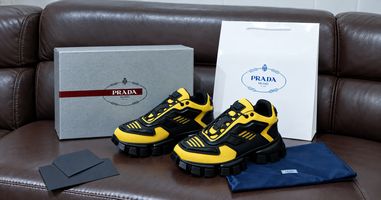
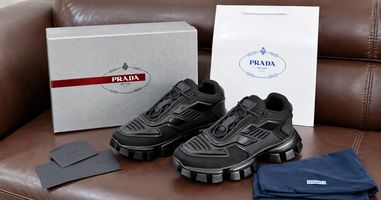
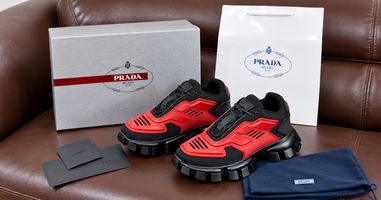
The oversized lug sole extends well beyond the visual proportions of a low-profile sneaker, so the shoe can look bigger than the internal fit actually feels. Judging size from a mirror or product photo can therefore be misleading.
The better test is whether the foot sits in the correct place relative to the heel and flex area. If those positions feel right, the exterior scale should not by itself justify changing size.
This distinction is particularly useful for someone moving from slimmer footwear, where exterior length and internal fit may appear more closely related.
5. How Should Forefoot Width Be Judged?
Focus on where the foot actually meets the upper rather than on overall shoe width from the outside.
A broader forefoot should not feel squeezed beneath one section of the molded structure. Conversely, a narrower foot should not slide sideways simply because extra length was chosen.
If moving up a size solves side pressure but introduces noticeable movement elsewhere, the problem may not be length. That is a more useful signal than automatically treating every width issue as a reason to size up.
6. Can the Structured Upper Affect the First Impression?
Yes. Prada Cloudbust Thunder uses a technical upper reinforced by prominent molded elements, so the shoe can initially feel more built-up than a softer sneaker.
That sensation should be separated from actual discomfort. Localized pressure near one part of the upper deserves more attention than an overall feeling of structure.
If the foot remains stable and no specific area feels compressed, the size may still be appropriate even when the shoe feels more substantial than expected during the first try-on.
7. Should Sock Thickness Change the Decision?
Only when that sock thickness reflects how the pair will really be worn.
A heavier sock can reduce available internal space, while a thin sock may expose movement that was not obvious during the first fitting. The useful comparison is therefore between realistic combinations rather than extreme ones.
Someone expecting to wear the pair mainly in warmer months should test accordingly. If colder-weather use is more likely, a slightly heavier everyday sock gives a more relevant reading.
8. When Is It Better to Reconsider the Model Rather Than the Size?
If every size solves one issue but creates another, the problem may be the relationship between the foot and the design rather than the number selected.
For example, increasing length may relieve pressure but allow too much movement, while reducing length may secure the heel but place the foot too close to the front.
The broader design assessment explains how the sole, upper construction, proportions, and intended use affect the overall buying decision. In that situation, comparing another Prada model can make more sense than continuing to adjust size.
9. What Should Men With Wider Feet Pay Particular Attention To?
For wider feet, Prada Cloudbust Thunder men sneakers should be judged by where pressure develops across the forefoot and how that pressure changes once weight is placed on the shoe.
A size that feels acceptable while seated can become less convincing when standing if one section of the upper presses inward. Increasing length may not solve that relationship.
The more useful goal is a fit where the foot sits centrally inside the shoe without needing excess front space to compensate for width.
10. Can the 60 mm Lug Sole Make a Poor Fit More Noticeable?
It can.
A substantial base changes how the shoe moves beneath the foot. If the size is too loose, internal movement may become easier to notice because the foot and the heavy-looking outsole are not moving as one unit. If the fit is too tight, the structured upper can make concentrated pressure harder to overlook.
Walk several normal lengths and pay attention to whether the foot remains settled while the sole rolls through each step. The useful question is not whether the shoe feels light or flexible, but whether the foot stays consistently positioned inside it.
That makes movement a better test than judging the pair while standing still.
11. What Should Confirm the Final Size?
The final choice should feel integrated rather than merely snug. Prada Cloudbust Thunder shoes should allow the foot to move together with the substantial sole without sliding internally or meeting persistent pressure from the structured upper.
A correct size should not need to compensate for the sneaker's oversized appearance. The exterior can look large while the internal fit remains precise.
The strongest confirmation is that the foot stays centered, the molded upper does not create a recurring pressure area, and the 60 mm base feels connected to the step rather than separate from it.