
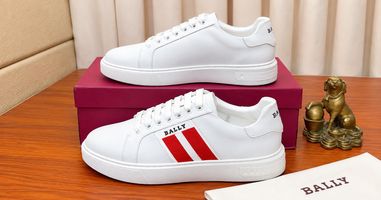
Which Bally Sneakers Work Best With Jeans,Chinos,and Trousers?
1.Quick Answer
Bally sneakers work best with everyday trousers when sole volume,upper complexity,and visible length match the hem above them.Straight jeans can support more sneaker presence,while chinos usually favor cleaner proportions.Tapered or cropped trousers expose more of the shoe,so side volume and sole width become harder to ignore.
The safest choice is not automatically the smallest sneaker.It is the one that remains balanced as trouser width,length,and fabric change.
Start with the hem.Then judge how much sneaker the trousers actually reveal.
2.Start With the Hem,Not the Shoe
A sneaker can look balanced by itself and feel completely different once a trouser leg drops over it.
The hem decides how much upper,sole,and collar remain visible.It also changes where the eye sees the transition from leg to footwear.
Straight denim gives the shoe more room.Tapered trousers expose more sidewall.A cropped hem can reveal the tongue and collar almost completely.
Fabric matters too.Heavier denim tends to hold its line above the sneaker,while softer trousers may drape closer to the upper.
Before comparing shoes,look at the trousers already worn most often.That gives the sneaker a real frame instead of an empty product-page background.
3.Straight Jeans Give You More Freedom
Straight denim is usually the easiest starting point because the hem creates enough visual space around the sneaker.
A cleaner leather design works easily here,but more layered bally mens sneakers can also sit naturally beneath denim without taking over the lower half.
Dark denim tends to sharpen a simpler shoe.Faded or textured denim can handle more material contrast.
The cuff also changes the result.A single turn-up exposes more of the upper and shortens the visual distance between trouser and sole.An uncuffed hem usually softens a substantial sneaker because more fabric falls around it.
Straight denim is forgiving,but the shoe still needs enough proportion to look intentional rather than merely large.
4.Tapered Jeans Reveal the Side Profile
Tapered denim is less forgiving because the opening sits closer to the shoe.
More of the sidewall remains exposed,and the transition from trouser to sneaker becomes sharper.A broad heel or deep sole can therefore look larger than it did under straight jeans.
The amount of taper matters more than the label itself.A moderate taper may still work with a substantial sneaker,while a narrow ankle opening can make the same shoe feel oversized.
Hem length helps control that effect.
A little break allows the fabric to meet the upper and soften the transition.A very short hem leaves the shoe fully exposed,which puts more pressure on the sneaker's proportions.
5.Chinos Make Proportion Easier to See
Chinos have less surface texture than denim,so the shoe receives more attention.
That is where bally sneakers with a cleaner upper or restrained base usually integrate more easily.
A stronger sneaker can still work,but it helps when one element carries the emphasis rather than several.A noticeable sole paired with a calm upper can look controlled.A layered upper on a quieter base can do the same.
Fabric weight also matters.
A heavier cotton chino can sit cleanly above a sneaker,while a softer pair may collapse closer to the upper and reveal more of its width.
The cleaner the trouser,the less room there is for unnecessary visual competition.
6.Break Length Can Change the Same Pair
One sneaker can look very different under the same trousers simply because the hem falls differently.
A slight break lets the fabric rest over part of the upper.This can soften a larger sole and reduce how much of the collar is visible.
No break creates a cleaner line,but it exposes more of the shoe.
A cropped hem goes further,turning the sneaker into a much more obvious part of the outfit.
None is automatically better.
The useful question is whether the shoe benefits from being partially covered or looks stronger when its full outline remains visible.
This is why trouser length should be considered before deciding that a sneaker is too large or too quiet.
7.Wider Trousers Need Enough Shoe Underneath
Wider trousers can support greater sneaker volume,but they can also hide too much of a small shoe.
Broad search terms such as bally sneakers men cover footwear with very different proportions,and wide trousers make those differences easier to understand.
A fuller leg usually has enough visual weight to support a deeper sole or layered upper.The problem appears when the shoe disappears almost completely beneath the hem or extends far beyond it.
The relationship should feel deliberate.
A sneaker with too little presence can make the foot look undersized.A shoe with excessive width can pull attention downward.
Matching the scale of trouser and footwear usually matters more than choosing the boldest option.
8.Cropped Trousers Expose the Whole Construction
Cropped trousers show more of the sneaker than almost any other common trouser length.
The tongue,collar,lace area,and top edge of the upper may all remain visible.Small details that disappear under denim become important.
Sock exposure also enters the picture.
A small gap can make the sneaker look deliberate.A large empty space between hem and collar can make a low shoe feel disconnected from the trousers.
This is especially useful for evaluating layered uppers.
If a sneaker only looks balanced when half of it is hidden beneath full-length trousers,it may not be as adaptable as it first appeared.
9.Narrow the Category After Checking the Trousers
Once the dominant trouser types are clear,the wider bally sneakers for men selection becomes easier to reduce.
Someone wearing mostly straight denim has more room to consider substantial soles and layered uppers.Someone relying on tapered chinos may benefit from tighter proportions and fewer competing elements.
The category should therefore come after the clothing check,not before it.
This prevents the comparison from turning into a long list of attractive shoes that solve different problems.
A useful shortlist should already make sense beneath the trousers worn most often.
10.Clean Trousers Magnify Small Differences
The less texture the trouser carries,the more visible small sneaker details become.
Contrast stitching,mesh panels,side overlays,and bright sole edges can all feel stronger beneath plain chinos or wool-blend casual trousers than beneath denim.
That does not mean those elements need to disappear.
They simply need room.
A sneaker with several upper details may work well if the sole remains restrained.A stronger base can work if the upper stays simple.
Cleaner trousers reward editing.They make it easier to see whether every element contributes something or whether the shoe is carrying more visual information than the outfit needs.
11.Side View Tells More Than Top View
Looking down at a sneaker can hide much of what matters beneath trousers.
The side view shows toe length,sole depth,heel height,and the amount of rubber sitting below the upper.These proportions are especially useful when comparing bally men's sneakers for tapered or straight trousers.
A longer-looking toe may feel balanced under straight denim but extended beneath a narrow opening.
A deeper heel can sit comfortably under heavier trousers while becoming dominant beneath cleaner chinos.
The hem meets the sneaker from the side,so that is the angle that deserves the most attention.
Logos and lace details matter less if the basic side proportion does not work.
12.Color Contrast Changes Perceived Size
A sneaker can look larger without actually being larger.
Contrast creates that effect.
A dark upper over a bright sole separates the base visually and makes it more noticeable.A tonal combination can make a similarly deep sole appear quieter because the transition is less obvious.
The same applies to overlays.
Strong contrast makes each panel easier to see.Softer tonal relationships allow the upper to read more as one unit.
This matters most beneath simple trousers,where there are fewer competing textures.
If the hem is narrow and the trouser is clean,reduced contrast can make a substantial sneaker easier to integrate.
13.Use Three Real Trousers Before Deciding
Instead of asking whether a sneaker is versatile in general,judge it against three actual pairs:
• The jeans worn most often.
• The cleanest chinos or trousers in regular use.
• The pair with the most difficult hem width or length.
The goal is not for the sneaker to look identical beneath all three.It only needs to avoid a clear mismatch.
A shoe that feels oversized under one,too busy under another,and too long under the third is probably too specialized.
A sneaker that remains convincing across all three has a much stronger case for frequent wear.
This test keeps the decision tied to a real closet rather than an abstract idea of versatility.
14.The Final Trouser Match
The best bally sneakers for jeans,chinos,and trousers keep their proportions convincing as the hem changes.
Straight denim gives the most freedom.Chinos reveal upper complexity and sole contrast more clearly.Tapered or cropped trousers expose even more of the shoe and leave less room for poor proportion.
Before choosing,check:
• How the sole width meets the trouser opening.
• How much of the upper remains visible.
• Whether the hem length helps or hurts the transition.
• Whether the sneaker works beneath at least three trousers already owned.
If those points hold up,the final choice is based on actual clothing compatibility rather than an isolated product image.
Common QuestionsDo straight jeans work with larger sneakers?
Usually,yes.Straight denim leaves more space around the shoe,so a stronger sole or layered upper is less likely to dominate.
Are cleaner sneakers easier with chinos?
Often,yes.Chinos expose sole volume and upper detail more clearly,so restrained proportions usually require fewer adjustments elsewhere.
Does trouser break affect sneaker choice?
Yes.A slight break can soften a larger sneaker,while a cropped or no-break hem exposes more of the upper and sole.
Do wider trousers require larger sneakers?
Not necessarily,but the shoe needs enough presence to remain balanced beneath a fuller leg.The goal is proportional scale rather than maximum size.
James Anderson
James Anderson is a luxury footwear writer specializing in designer shoes,fashion craftsmanship,and timeless style.He explores the materials,construction,heritage,and design philosophy behind iconic footwear brands,providing practical insights into choosing and styling luxury shoes for different occasions.His guides help readers understand the details behind premium footwear and how these pieces fit into modern wardrobes.