
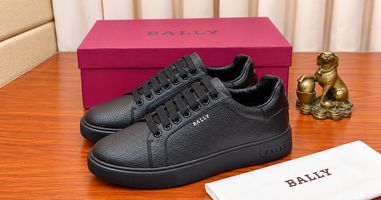
Bally Sneakers:How Upper and Sole Structure Change Fit,Flex,and Foot Hold
1.Quick Answer
Bally sneakers can feel very different even when their size and materials look similar because upper stiffness,flex location,tongue volume,heel structure,and sole resistance all change how the foot moves inside the shoe.The better construction is the one that bends in the right place,holds the heel without pressure,and leaves the forefoot enough usable room.
This is why material alone is a weak shortcut.
Two leather sneakers can behave differently if one has more overlays,a firmer heel counter,or a sole that resists bending farther forward.The same applies to softer or mixed-material uppers.
The useful comparison starts with movement rather than appearance.
2.Upper Stiffness Changes the First Few Steps
The upper begins affecting the shoe before the sole has fully flexed.
A firmer construction can hold the foot more closely,but it can also create pressure if the material resists around the wrong area.A softer upper may adapt more easily while offering less structure around the sides.
Neither result is automatically better.
The important areas are usually:
• The forefoot where the toes widen.
• The instep beneath the laces.
• The crease line behind the toes.
• The rear quarter around the heel.
A sneaker that feels secure at the heel but restrictive across the forefoot may simply be using structure in the wrong place for that foot.
3.Panel Placement Affects How the Upper Bends
The number of panels matters less than where they are placed.
Some men bally sneakers may use overlays across areas that flex during walking,while another construction leaves those areas relatively uninterrupted.
An overlay crossing the main bend of the forefoot can make the shoe feel firmer.A panel positioned farther back may add structure without interfering as much with toe-off.
This is one reason two visually similar sneakers can move differently.
Look at the upper from the side and identify where the material changes.If several seams or overlays meet near the natural crease line,the first few wears may feel different from a simpler construction.
The issue is not whether layering is good or bad.It is whether it sits in a useful place.
4.Tongue and Lacing Change Instep Pressure
Instep comfort is not controlled by size alone.
Tongue thickness,lacing position,and the stiffness of the upper around the eyelets can change how pressure is distributed across the top of the foot.
A thick padded tongue may feel comfortable at first but can reduce usable space for a higher instep.A thinner tongue may create more room but less cushioning between the laces and foot.
Lacing also changes the result.
If the heel only stays secure when the laces are pulled very tight,the shoe may begin transferring too much pressure to the instep.
A better fit usually holds the foot without requiring one area to compensate for another.
5.The Sole Has to Bend Where the Foot Bends
The flex point is one of the most useful things to check in bally sneakers.
A shoe should begin bending reasonably close to the forefoot rather than folding through the middle or resisting movement until too late in the stride.
Sole thickness alone does not predict this.
A substantial sole may still flex efficiently if its construction allows movement in the right area.A thinner base can feel unexpectedly rigid if the material or internal structure resists bending.
Look at:
• Where the sole first creases.
• Whether the upper bends at the same location.
• Whether the heel stays planted as the forefoot moves.
• Whether the toes need to work against noticeable resistance.
Upper and sole need to cooperate through the same part of the stride.
6.Heel Hold Comes From More Than Padding
A padded collar does not automatically create secure heel hold.
Rear fit depends on several parts working together:
• Heel counter firmness.
• Collar height.
• Opening width.
• Upper tension from the laces.
• Internal volume around the rear foot.
Too much space can create lift.Too little can produce rubbing or pressure around the Achilles area.
A structured heel may help stabilize one foot while feeling restrictive on another.
The useful test is simple:walk normally rather than judging the heel while standing still.
A small change in rear movement becomes much easier to notice once the foot begins rolling forward.
7.Compare Constructions After Identifying the Weak Point
Once the specific issue is clear—forefoot restriction,instep pressure,heel movement,or poor flex—the wider the sneaker selection becomes easier to compare.
There is little value in comparing every construction at once.
If the current problem is heel movement,focus on rear structure and opening geometry.
If pressure appears over the instep,look more closely at tongue thickness,lacing,and upper stiffness.
If the shoe resists during toe-off,the flex relationship between upper and sole deserves more attention.
This keeps the comparison tied to a real fit problem rather than a long list of features.
8.The Same Size Can Feel Different Across Constructions
The phrase mens bally sneakers may group several shoes under one category,but identical labeled sizes can still create different internal space.
A structured upper may use some of that space differently from a softer one.Thicker padding can reduce room around the collar or tongue.A different heel shape can change how far the foot settles toward the rear.
That means outside dimensions are not enough.
Two shoes may appear almost equal in length while one feels tighter over the instep or less secure at the heel.
The better comparison is based on where the foot actually contacts the shoe.
Fit becomes easier to understand once pressure and movement are treated separately.
9.Flex Resistance Changes Through the Stride
Flex is not simply “soft” or “stiff.”
What matters is when resistance appears.
A sneaker may feel firm at first contact but move smoothly once the forefoot loads.Another may seem flexible in the hand yet resist more noticeably during toe-off.
That difference can come from the sole,upper,or the way the two are joined.
Watch for three stages:
• Heel contact.
• Midfoot transition.
• Forefoot bend.
The shoe does not need to feel equally flexible at all three.
It needs to move predictably without forcing the foot to compensate at one stage.
10.Construction Matters More Than a Technical Look
Some bally sneakers may appear more technical because they use layered uppers,visible reinforcement,or more substantial soles.
Those details should not be treated as proof of better support or movement.
A reinforced panel is only useful if it stabilizes an area that needs it.
A deeper sole is only relevant if its flex and geometry suit the stride.
A structured heel is only helpful if it improves hold without creating pressure.
This separates actual construction behavior from appearance.
The sneaker that looks more engineered is not necessarily the one that will work better on a particular foot.
11.Warning Signs Appear in Specific Places
A poor construction match usually shows itself through repeated local problems rather than a vague feeling that the shoe is wrong.
Common signs include:
• Heel lift that continues after secure lacing.
• Pressure concentrated over the instep.
• Forefoot compression near the widest part of the foot.
• A crease that digs into the toes.
• Flex resistance that makes toe-off feel forced.
• Collar rubbing that returns with normal walking.
One issue may be adjustable through lacing or socks.
Several appearing together usually suggest that the construction itself is a poor match.
That is more useful information than assuming the shoe simply needs a long break-in period.
12.Use a Short Movement Test Before Deciding
A useful check does not need to be complicated.
Walk at a normal pace,stop,turn,and take several longer steps.
During that sequence,notice:
Where does the heel move?
Where does the upper first crease?
Does the instep pressure increase once the foot bends?
Does the forefoot have room when weight shifts forward?
Does the sole resist more than expected during toe-off?
These observations reveal more than repeatedly pressing the upper with a hand.
The goal is to see how the construction behaves while the foot is doing the movements it will repeat throughout the day.
13.The Final Construction Check
The best bally sneakers should allow the upper,heel,and sole to manage different parts of the stride without one area creating a new problem.
Before narrowing the final choice,check four things:
• Does the upper bend without concentrating pressure?
• Does the heel stay secure without excessive tightening?
• Does the sole flex near the natural forefoot bend?
• Does the internal space remain usable once the foot is moving?
A sneaker does not need the softest upper,the deepest sole,or the most reinforcement.
It needs a construction whose parts work together around the foot.
That is the more useful way to separate two sneakers that may look similar on a product page but behave very differently once worn.
James Anderson
James Anderson is a luxury footwear writer specializing in designer shoes,fashion craftsmanship,and timeless style.He explores the materials,construction,heritage,and design philosophy behind iconic footwear brands,providing practical insights into choosing and styling luxury shoes for different occasions.His guides help readers understand the details behind premium footwear and how these pieces fit into modern wardrobes.