
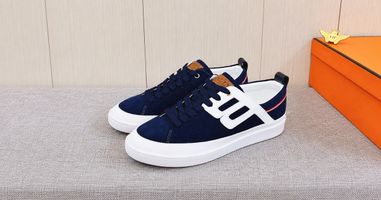
Bally men sneakers size guide,width,and US–EU conversion
Choosing a sneaker size becomes easier when three questions stay separate the length work?Is the forefoot wide enough?Does the shoe hold the heel without pressing the instep?A conversion chart suggests a label,but only measurements and an indoor walking test can answer all three.
Start with the converted size,then compare an adjacent size only when a specific problem appears.Automatically sizing up for width or down for heel movement often creates a second problem.The cause matters more than the number on the box.
Quick Answers
Do these sneakers run true to size?
No single answer applies to every shape.A regular US sneaker size is a useful starting reference,but toe shape,closure,and internal volume can change the result.
What should you do if you are between sizes?
Choose the smaller size only when the toes remain clear and the forefoot has no pressure.Choose the larger size when length is restricted.If one pinches and the other feels too long,change shape.
Is US–EU conversion exact?
The labels follow a reference sequence,but models can have different internal dimensions.Conversion creates a shortlist;an on-foot test confirms it.
How much heel movement is acceptable?
A slight shift can occur as a new sneaker flexes.The heel should not rise repeatedly,slide sideways,or rub.
Can an insole correct a loose fit?
An insole can reduce minor excess volume.It cannot correct excessive length,insufficient width,or the wrong shape.
Chapter 1 With a Pair That Already Fits
Bally men sneakers are easier to assess against a sneaker already worn comfortably for several hours.Record its label,toe clearance,forefoot position,heel hold,and usual socks.
Stay within the same general category.A running-influenced sneaker and a low-profile leather sneaker may share a label yet feel different because their toe shapes,padding,and internal volumes differ.A formal shoe is a weaker comparison.
A heavily worn sneaker confirms the size used,but its compressed footbed,softened upper,and stretched collar no longer represent the space available when new.
Do not compare exterior sole length.An outsole may extend beyond the heel or toe,so outside measurements do not reliably show usable interior space.
Chapter 2 Size Conversion as a Reference
US and EU labels describe the same general size sequence in different numbering systems.For common men's sizes,the reference conversion is:
• US 5→EU 38
• US 5.5→EU 38.5
• US 6→EU 39
• US 6.5→EU 39.5
• US 7→EU 40
• US 7.5→EU 40.5
• US 8→EU 41
• US 8.5→EU 41.5
• US 9→EU 42
• US 9.5→EU 42.5
• US 10→EU 43
• US 10.5→EU 43.5
• US 11→EU 44
• US 11.5→EU 44.5
• US 12→EU 45
• US 12.5→EU 45.5
• US 13→EU 46
• US 13.5→EU 46.5
• US 14→EU 47
For bally men shoes,the converted result matches labels;it does not promise identical toe room or width.US 9 corresponds to EU 42,but a particular EU 42 may not suit a wide forefoot or high instep.
Keep the displayed sizing system visible while comparing.Order by the US number when US sizes are listed.For EU listings,use the converted EU number and retain the US size as a cross-check.
Half sizes follow the same sequence,but every model may not offer them.If the converted label is unavailable,the next full size is not automatically suitable.Check how much length and volume the change introduces.
Chapter 3 Both Feet Before Ordering
Measure while standing because the foot spreads under body weight.Wear the intended socks and measure later in the day.
Place paper on a hard floor with one edge against a wall.Stand with the heel lightly touching the wall.Mark the longest toe,then measure from the wall edge to the mark.Repeat on the other side.
For width,mark the widest parts of the forefoot and measure between them.Keep the result in centimeters and inches to avoid repeated rounding.
A measured width does not convert automatically into a universal wide label.Use it as a personal baseline.A removable footbed from a comfortable reference pair offers a secondary comparison near the ball,but its edge shape should not overrule how the new shoe feels.
Use the longer foot for length and the wider foot for width.They may be on different sides,which explains why the same pair can feel different on each foot.
Measurement narrows the range rather than selecting the final size.If the result and an old label disagree,recheck the measurement and use the indoor test to resolve the difference.
Chapter 4 Toe Room From Heel Hold
Length and heel hold require separate checks.The longest toe needs clearance,but the amount varies with toe shape.A tapered sneaker may show unused space beyond shorter toes while pressing the longest one,so judge the foot rather than the upper's outline.
Stand upright and gently locate the longest toe.It should not touch the front while standing,walking,or turning.The toes should remain relaxed.
A secure heel sits centrally and moves with the shoe.A small shift during flexing may be acceptable;repeated lifting,sideways sliding,or rubbing is not.Retie the laces evenly before changing size.
If the toes have generous room and the heel lifts,the shoe may be too long or spacious at the rear.If the toes are close to the front,the cause may be collar shape,instep volume,or lacing.Sizing down could create a toe problem.
Chapter 5 Width,Instep,and Forefoot Volume
Width describes how the foot sits at the ball,along the little-toe side,and beneath the instep.A correct length can still fail when one area lacks space.
When comparing bally shoes for men,the forefoot should lie flat instead of hanging over the footbed.The little toe should not be pushed inward.The upper may follow the foot,but sustained pressure,numbness,or a sharp crease indicates poor width.
The instep creates a different problem.On a lace-up sneaker,the eyelet area should close with a balanced gap.If it pulls unusually close while the heel stays loose,internal volume may be excessive.If the sides remain far apart and the tongue presses down,more instep room may be needed.
Pressure location identifies the likely cause.Beside the little toe,it suggests forefoot width or toe-shape conflict;beneath the tongue,it suggests limited instep space.A moving heel with a secure middle signals rear volume rather than a need for shorter length.
Moving up half a size adds length and some overall space.It can help when the entire shoe feels small,but not when only width is missing.Extra length may introduce heel lift without supplying the needed forefoot shape.
Chapter 6 for Upper Shape and Closure
The upper changes how space feels,not the basic length requirement.Structured leather makes pressure easier to identify.A softer textile may accommodate movement,but the toes still need clearance and the foot must remain centered.
Laces provide control over midfoot volume.Tension can be reduced over a high instep or tightened through the middle for greater heel security.The adjustment should remain even.
Slip-on styles depend more on the vamp,instep,and heel.Without laces to recover excess volume,a secure initial hold matters more.A soft collar can still allow too much movement.
Browse bally men sneakers after establishing a likely size range.Let shape and closure refine that measured choice.
Break-in cannot correct length.Leather can soften and textile can relax,but neither creates room in front of a toe that already touches the shoe.
Chapter 7 Between Two Adjacent Sizes
Being between sizes may mean a length between labels,a width conflict,or too much or too little internal volume.The cause determines the decision.
Choose the smaller adjacent size when:
• The longest toe remains clear during movement.
• The forefoot is supported without side pressure.
• The instep feels held rather than compressed.
• The heel is stable after normal lacing.
Choose the larger adjacent size when:
• The smaller size brings a toe close to the front.
• Pressure spreads across the entire forefoot.
• The shoe feels short when turning or descending a step.
• The larger pair remains controllable through ordinary lacing.
Choose a different shape when the smaller size pinches at the sides while the larger creates obvious extra length.Do the same when neither size holds the heel without pressing the instep.
Compare both sizes in one indoor session with the same socks and lacing tension.Side-by-side testing makes small differences clearer.
If only one adjacent size is available,apply the same standards rather than allowing availability to decide.A different model or a later purchase is safer than accepting toe contact,lasting side pressure,or uncontrolled heel movement.
Chapter 8 for Socks,Insoles,and Orthotics
Bally men shoes can feel different when socks change.A thin dress sock occupies less volume than a cushioned athletic sock.Test with the pair intended for actual use.
An added insole reduces minor looseness,but it also raises the foot and may create pressure at the tongue or collar.A heel pad changes rear volume without correcting excessive length.
With an orthotic,check whether the existing footbed can be removed and whether the shoe has enough depth.Stacking it over a fixed footbed may crowd the toes and raise the heel.
Accessories should fine-tune a nearly correct fit.They should not rescue a size that fails the basic length or width checks.
Chapter 9 a Clean Indoor Test
Try both shoes on a clean,hard indoor surface before removing labels or wearing them outside.Lace normally,stand,and compare both feet.Do not judge the pair while seated.
Walk straight,turn both ways,and stop.If an indoor stair is available,take several careful steps.The foot should remain centered,the heel should stay controlled,and the toes should not slide forward.
The main flex belongs near the ball of the foot.If the upper folds far ahead of the toes or behind the natural forefoot bend,the length or shape may be wrong.
After several minutes,check for concentrated pressure.Mild awareness of a new upper differs from heat,sharp pressure,or numbness.A problem that appears quickly indoors will matter more during a full day.
Repeat with the second candidate size when available.Choose fewer compromises across both feet,not the softest first impression.
For a closer comparison,wear one candidate size on each foot briefly,then swap sides.This separates size differences from natural differences between the feet.The same size should produce a similar pattern of room or pressure after the swap.
Chapter 10 Expensive Sizing Mistakes
Common mistakes begin with shortcuts.An old size is converted once and treated as final,without accounting for shoe shape,sock thickness,or the condition of the reference pair.
When reviewing bally men sneakers,resist changing size to solve the wrong issue.Sizing down solely to stop heel lift may crowd the toes;moving up for a forefoot-shape conflict may add unwanted length.A flexible upper will not correct insufficient length,and excessively tight laces will not remove extra internal volume.Test both shoes and judge the fit rather than the expected number on the box.
Softness can also distract from poor control.A pleasant footbed does not compensate for an unstable heel,and break-in cannot move the front,redesign the toe shape,or shorten an overly long interior.Check movement and alignment first.
Chapter 11 the Final Size Decision
The final choice must pass every essential check without relying on future improvement.Use this list before keeping the pair:
• The longest toe remains clear while standing and walking.
• All toes can rest naturally without curling or overlapping.
• The forefoot stays inside the usable footbed.
• The upper does not create sustained side pressure.
• The instep feels secure without downward compression.
• The heel remains centered with no repeated rubbing.
• The foot does not slide forward during stops or downward steps.
• The shoe bends close to the natural forefoot flex.
• The planned socks and insoles have been included in the test.
• Both feet have been evaluated separately.
If one size passes length but fails width,and the next passes width but fails heel hold,choose a different internal shape.
The correct size is not automatically the familiar number or neatest conversion.It gives the longer foot enough room,the wider foot enough space,and both heels enough control.Once those conditions agree,the label has done its job.
James Anderson
James Anderson is a luxury footwear writer specializing in designer shoes,fashion craftsmanship,and timeless style.He explores the materials,construction,heritage,and design philosophy behind iconic footwear brands,providing practical insights into choosing and styling luxury shoes for different occasions.His guides help readers understand the details behind premium footwear and how these pieces fit into modern wardrobes.